<?xml version="1.0" encoding="utf-8"?><feed xmlns="http://www.w3.org/2005/Atom" ><generator uri="https://jekyllrb.com/" version="4.3.4">Jekyll</generator><link href="https://www.teochew.net/feed.xml" rel="self" type="application/atom+xml" /><link href="https://www.teochew.net/" rel="alternate" type="text/html" /><updated>2026-05-30T23:05:41+08:00</updated><id>https://www.teochew.net/feed.xml</id><title type="html">Teochew.net</title><subtitle>Teochew.net gathers the stories, food, language, craft and journeys of the Teochew (Chaoshan / 潮汕) people across the homeland and the global diaspora — culturally inclusive, for every Teochew community everywhere.</subtitle><author><name>Teochew.net</name></author><entry><title type="html">Movie “Dear You” and the market value of sincerity</title><link href="https://www.teochew.net/dear-you-small-film-big-market/" rel="alternate" type="text/html" title="Movie “Dear You” and the market value of sincerity" /><published>2026-05-30T00:00:00+08:00</published><updated>2026-05-30T00:00:00+08:00</updated><id>https://www.teochew.net/dear-you-small-film-big-market</id><content type="html" xml:base="https://www.teochew.net/dear-you-small-film-big-market/"><![CDATA[<p><em>Dear You</em> (给阿嬷的情书) arrived in Chinese cinemas without the usual signs of a major commercial event. It had no widely promoted superstar cast, no obvious visual-effects hook, and, according to widely shared Chinese online commentary, a reported production budget of only 14 million yuan (roughly US$2 million). Much of the film is performed in Teochew, a regional language or dialect that is meaningful to Chaoshan and diaspora audiences but unfamiliar to many viewers elsewhere in mainland China.</p>

<p>Reading through several commentary pieces on Douyin and public posts, the film climbed from a very limited initial screening share of about 1.6 percent to roughly 35 percent as word of mouth grew. Imagine beginning with only 1.6 percent of cinema screenings, then rising to 35 percent across mainland China’s theatrical market.</p>

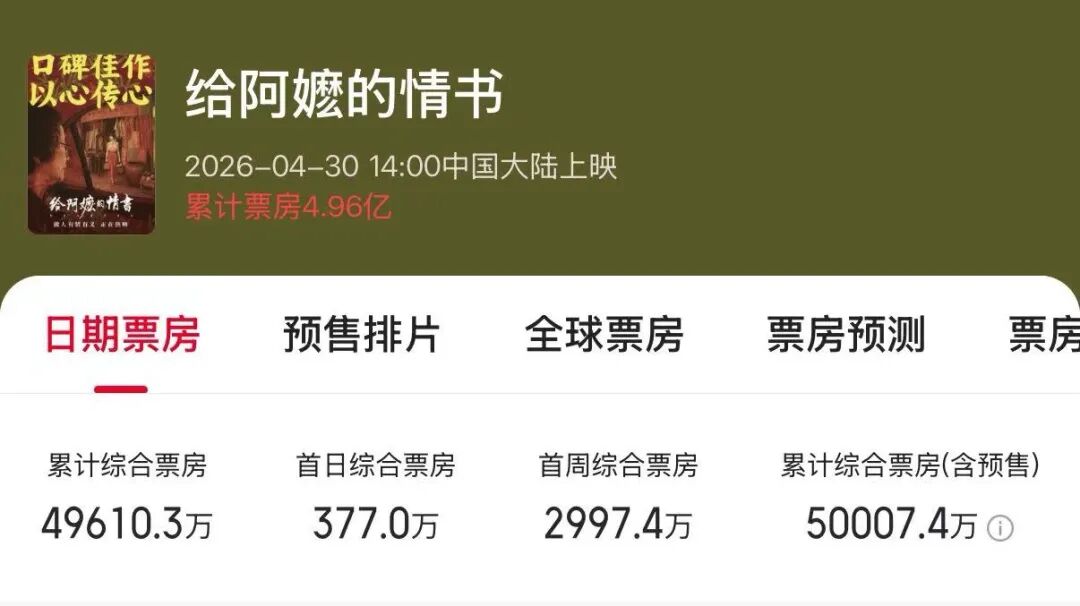
<p>That put its box office at around 1.6 billion yuan (roughly US$229 million), after three consecutive weeks at the top of the national chart. On a single Mother’s Day, ticket sales reached 119 million yuan (roughly US$17 million). The return against the reported budget would be close to 120 times.</p>

<h2 id="a-qiaopi-story">A qiaopi story</h2>

<p>At the center of the film is a qiaopi (侨批), the remittance-letter system once used by overseas Chinese migrants to send both money and messages back to families in southern China. For Teochew, Hokkien and other communities with long histories in Southeast Asia, qiaopi were not only private letters. They were financial instruments, family records and proof that someone across the sea was still trying to remain accountable to home.</p>

<p>An elderly Teochew grandmother has received letters from her husband in Thailand for eighteen years. The emotional turn is that the husband had died long before. The letters were instead written by Xie Nanzhi, a woman in Thailand who had never met the grandmother but continued writing in the dead husband’s name. This could easily have become melodrama. What makes the movie different, and what seems to have resonated with viewers, is that it becomes a story about obligation: one woman preserving another woman’s hope through a long, difficult fiction.</p>

<p>That premise explains why the film has travelled beyond a narrow regional audience. Viewers do not need to understand every Teochew phrase to recognize the structure of the feeling: migration, delayed communication, older parents waiting, younger generations discovering too late what had been carried for them. The specific culture matters, but the emotional grammar is not sealed inside one dialect.</p>

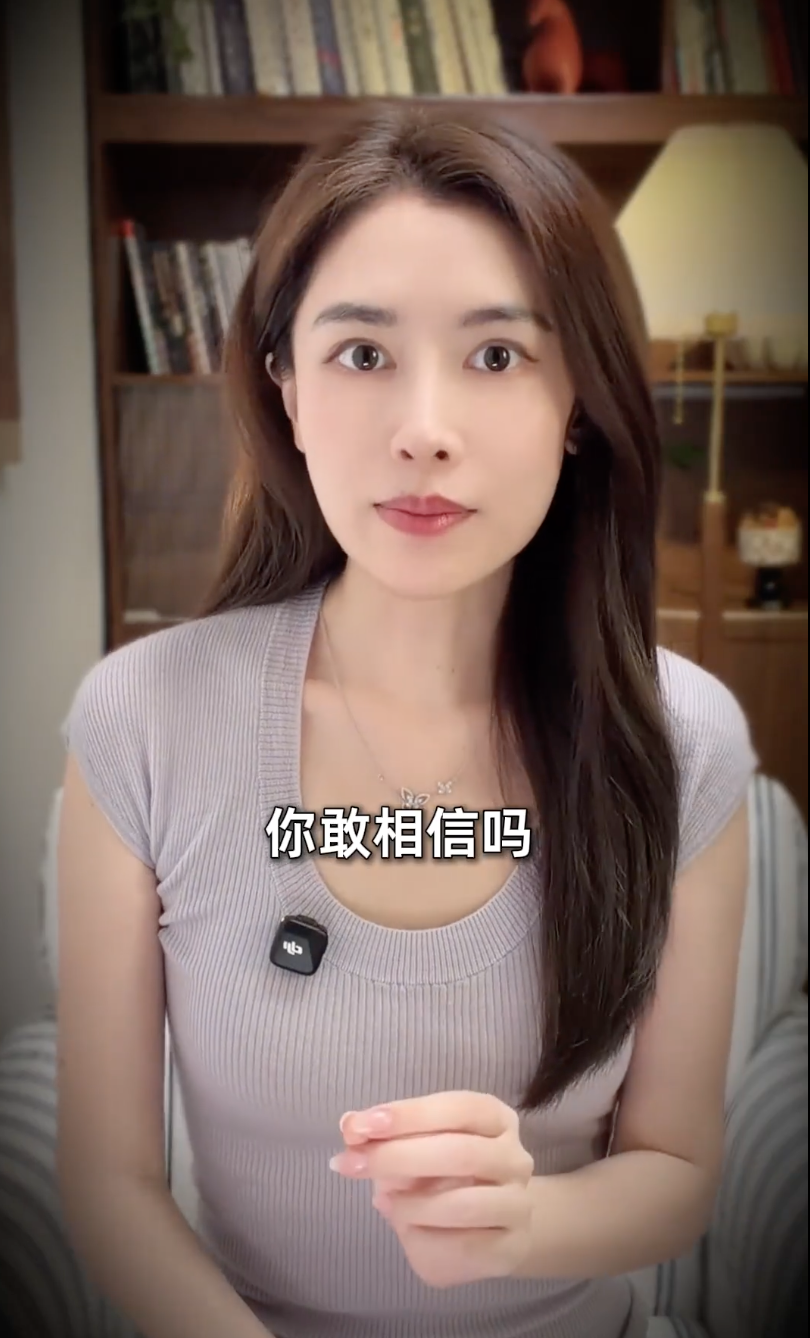
<figure class="figure--right">
  <img src="/assets/img/dear-you/commentary-creator-1.png" alt="A Chinese online commentator discussing Dear You" />
  <figcaption>Chinese online discussion helped turn <em>Dear You</em> from a regional film story into a broader conversation about audience trust and emotional realism.</figcaption>
</figure>

<h2 id="why-the-reception-mattered">Why the reception mattered</h2>

<p>The film’s online reception has been unusually strong. Its Douban score, on a mainstream Chinese film-rating platform, reached 9.2 from about 650,000 users, making it one of the year’s most highly rated Chinese films. Earlier in May, the score was already at 9.1 when the box office had passed 350 million yuan (roughly US$50 million), which suggests the rating remained high even as the audience expanded beyond early regional supporters.</p>

<p>The language used by viewers is also revealing. The recurring phrases are not about spectacle, twist endings or celebrity performances. They are about <em>qingyi</em> (情义): feeling, loyalty, human obligation. Some online comments say the film reminded viewers of grandparents, of parents left in hometowns, or of letters kept in family drawers. Others frame the film as a reminder to call home.</p>

<p>This kind of response can easily be overstated. Chinese social media often turns filmgoing into moral language very quickly, especially around family dramas. A movie about an elderly grandmother, sacrifice and letters from abroad invites emotional reading. Yet the scale of the response suggests more than routine tear-jerking. The audience seems to have treated <em>Dear You</em> as a correction to a film market they often accuse of overpricing stars and underinvesting in story.</p>

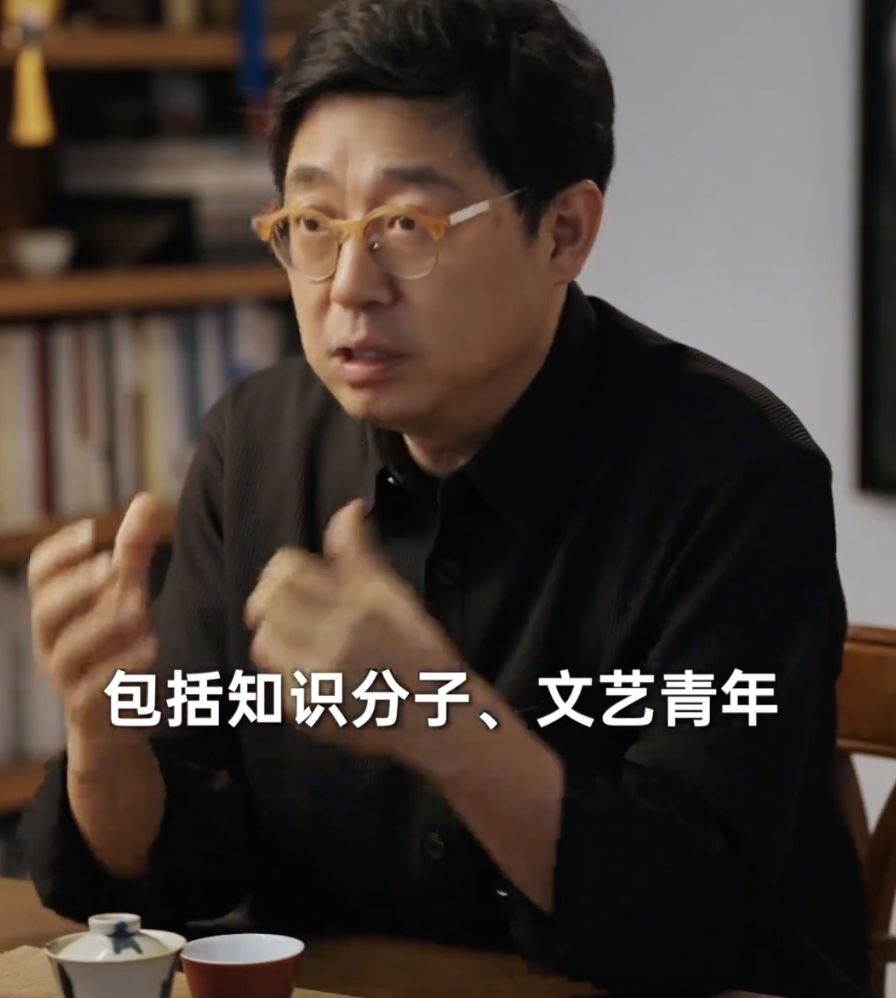
<figure>
  <img src="/assets/img/dear-you/commentary-creator-2.png" alt="A Chinese cultural commentator speaking about Dear You" />
  <figcaption>Commentators framed the film's success as a response to a market crowded with expensive stars, heavy promotion and thinner storytelling. Image: Xu Husheng, CEO of <a href="https://www.yit.com/">Yitiao</a>, commenting on the film.</figcaption>
</figure>

<h2 id="production-as-part-of-the-argument">Production as part of the argument</h2>

<p>The production background has become almost inseparable from the film’s reputation. The directing team spent three years visiting more than 300 overseas families and interviewing over 120 Chaoshan elders above the age of eighty. The same accounts say that around 90 percent of the film’s details were drawn from historical prototypes.</p>

<p>These details matter because they support the film’s claim to authenticity. The 84-year-old woman who plays Ah Ma, Wu Shaoqing, is described as a non-professional actor selected after a wide search among more than 300 Chaoshan grandmothers. Online commentators repeatedly stress that she does not appear to be “performing” in the conventional sense, but drawing from lived memory, body language and speech rhythms.</p>

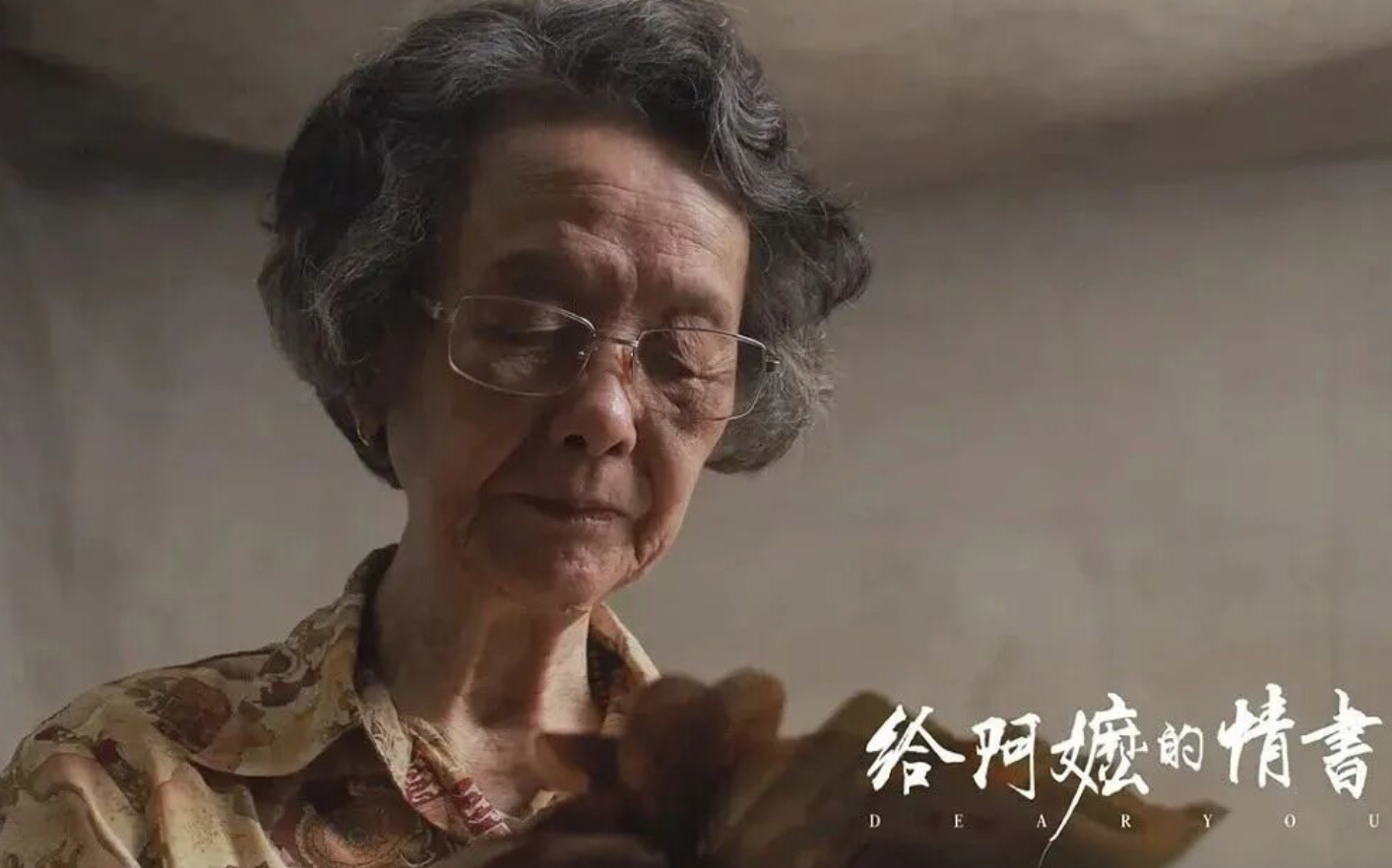
<figure>
  <img src="/assets/img/dear-you/ama-scene.png" alt="Ah Ma from Dear You reading a letter" />
  <figcaption>Ah Ma in <em>Dear You</em>. The film's reception has been closely tied to the perceived naturalness of its elderly lead performance.</figcaption>
</figure>

<p>There is a danger in romanticizing non-professional acting as automatically truthful. A performance can be sincere and still shaped by editing, direction and audience expectation. But in this case, the casting choice helps explain why viewers trusted the film. The grandmother is not presented as a polished symbolic figure. She appears as someone specific: local, aged, socially rooted and marked by the kind of waiting that the plot requires.</p>

<p>The low-budget details have also fed the public narrative. The summaries mention an iPad used as a monitor, simple camera setups, a tricycle used as a makeshift track, and total actor pay reportedly below 700,000 yuan (roughly US$100,000). These production anecdotes are now part of the film’s brand. They tell audiences that money was not the point. Restoration, dialect, texture and emotional credibility were.</p>

<h2 id="a-contrast-with-bigger-films">A contrast with bigger films</h2>

<p>The strongest online commentaries place <em>Dear You</em> against larger releases from the same period. They mention <a href="https://www.1905.com/mdb/film/2258589/info/"><em>Cold War 1994</em></a>, <a href="https://www.1905.com/mdb/film/2258018/"><em>A Writer’s Odyssey 2</em></a> and <a href="https://www.1905.com/mdb/film/2256984/"><em>Safe Journey</em> / <em>Give You A Candy</em></a> as examples of films with bigger budgets, star names or heavier industrial expectations that underperformed.</p>

<p>Those comparisons should be handled carefully. A family drama and a commercial action sequel are not trying to solve the same problem. Genre expectations, release windows, marketing cycles and audience demographics all differ. It is too simple to say that small sincere films succeed and large films fail. Chinese cinema has room for both intimate regional stories and expensive commercial productions.</p>

<p>Still, the comparison explains why <em>Dear You</em> became symbolic. If the reported figures are broadly accurate, then a 14 million yuan (roughly US$2 million) film reaching a 1.6 billion yuan (roughly US$229 million) box office challenges assumptions about what makes a movie commercially viable. It suggests that some audiences are not rejecting cinemas themselves. They are rejecting films that feel manufactured, overmarketed or emotionally hollow.</p>

<p>In that sense, <em>Dear You</em> did not only sell tickets. It became an argument about allocation. Where should money go, what counts as value, and how much does an audience actually care about celebrity when the story feels close to their own family history?</p>

<h2 id="what-the-film-shows-about-the-market">What the film shows about the market</h2>

<p>One Douyin summary connects the film’s success to the broader competition between cinemas and short-form video. That is a useful observation. In China, as elsewhere, audiences have become accustomed to emotional storytelling in short, vertical, highly compressed formats. A feature film now has to justify the time and attention it asks from viewers.</p>

<p><em>Dear You</em> appears to have done that by offering something short video cannot easily provide: duration. A qiaopi story depends on waiting, repetition, years of uncertainty and the slow accumulation of obligation. Its emotional force comes not from a single punchline but from the weight of time. That may be why the film reportedly drew a higher-than-average share of viewers over thirty-five. The story is not only about youth discovering family. It is also about middle-aged audiences recognizing what has already been lost, postponed or left unsaid.</p>

<p>The film also shows the continuing commercial power of regional culture when it is not treated as decoration. Teochew is not merely a flavor added to a Mandarin story. It is part of the social world that makes qiaopi, overseas migration and family obligation intelligible. For Teochew audiences, that may create recognition. For non-Teochew audiences, it offers texture and difference without making the story inaccessible.</p>

<h2 id="a-measured-success">A measured success</h2>

<p>The fairest way to read <em>Dear You</em> is neither as a miracle nor as proof that the Chinese film industry has been solved. Its success does not mean every low-budget film will find an audience. It does not mean stars are useless, marketing is irrelevant, or large-scale filmmaking is doomed. It does mean that audiences can still reward a film that feels carefully observed and emotionally disciplined.</p>

<p>The Chinese online response has sometimes turned the film into a weapon against “bad routines” in the industry: traffic stars, inflated budgets, weak scripts and bloated promotion. There is some truth in that frustration. But the more lasting lesson may be quieter. <em>Dear You</em> worked because its production method, subject matter and emotional register pointed in the same direction. A story about trust was made in a way that allowed viewers to trust it.</p>

<p>That is why the film matters beyond its box office. It brought qiaopi, Teochew speech and overseas Chinese family memory into a national conversation without sanding away their local specificity. It reminded the market that sincerity is not the opposite of craft, and modesty is not the opposite of ambition.</p>

<p>For the editorial team at Teochew.net, the film is especially worth watching because it turns a very particular history into public feeling. The letters in <em>Dear You</em> belong to one story, but the world behind them is much larger: Chaoshan villages, Southeast Asian migration routes, women who waited, workers who remitted, children who inherited silence, and families held together by paper moving across water.</p>

<p>The film’s achievement is that it lets that history speak plainly. In a crowded market, that plainness became its strength.</p>]]></content><author><name>Teochew.net</name></author><category term="Dear You" /><category term="qiaopi" /><category term="film" /><category term="Teochew" /><category term="Chaoshan" /><category term="Chinese cinema" /><summary type="html"><![CDATA[A neutral review of Dear You, the Teochew-language film whose low budget, strong word of mouth and qiaopi story reshaped Chinese online film discussion.]]></summary><media:thumbnail xmlns:media="http://search.yahoo.com/mrss/" url="https://www.teochew.net/assets/img/dear-you/dear-you-office-scene.png" /><media:content medium="image" url="https://www.teochew.net/assets/img/dear-you/dear-you-office-scene.png" xmlns:media="http://search.yahoo.com/mrss/" /></entry><entry><title type="html">Kueh: the pressed rice cakes that mark every Teochew season</title><link href="https://www.teochew.net/teochew-kueh-season-cakes/" rel="alternate" type="text/html" title="Kueh: the pressed rice cakes that mark every Teochew season" /><published>2026-05-29T00:00:00+08:00</published><updated>2026-05-29T00:00:00+08:00</updated><id>https://www.teochew.net/teochew-kueh-season-cakes</id><content type="html" xml:base="https://www.teochew.net/teochew-kueh-season-cakes/"><![CDATA[<p>On a Teochew table, you can often tell the time of year by the <strong>kueh</strong>.</p>

<p>Kueh (粿) is the Teochew word for a whole family of cakes — most of them pressed from rice flour, some steamed, some pan-fried, sweet or savoury, plain or stuffed. They are humble food, made at home from cheap grain, and yet they sit at the very centre of Teochew ritual life. There is an old saying in Chaoshan:</p>

<blockquote>
  <p>时节做时粿 — <em>sî-tsoih tsò sî-kueh.</em>
For each festival, you make that festival’s kueh.</p>
</blockquote>

<p class="lede">To follow a year of Teochew kueh is to follow the calendar of prayers, harvests and ancestors that the food was made to honour.</p>

<h2 id="the-pink-peach-of-celebration">The pink peach of celebration</h2>

<p>The most recognisable of them all is <strong>âng tô kueh</strong> (红桃粿), the “red peach kueh” — a soft pink dumpling pressed into the shape of a peach, the Chinese emblem of long life. Lift the lid off a steamer and there they are: glossy, rosy, lined up like little cushions.</p>

<p>Inside the thin rice-flour skin is usually a savoury filling of glutinous rice fried with dried shrimp, mushroom, peanuts and shallots. The blush of the skin traditionally came from a little red colouring worked into the dough and kneaded until the tint ran even. The shape and the colour are not decoration — they are the message. Red is auspicious; the peach wishes longevity. That is why âng tô kueh appear at birthdays, at New Year, and above all on the altar, offered to the gods (拜老爷) and to the ancestors.</p>

<p>The peach pattern comes from a <strong>kueh mould</strong> (粿印), a block of carved wood — often passed down in a family — pressed into the dough to leave the peach ridges and sometimes the character 寿, <em>longevity</em>, in the centre. To own your grandmother’s kueh mould is to own a small, dense piece of inheritance.</p>

<h2 id="a-different-kueh-for-every-season">A different kueh for every season</h2>

<p>Where âng tô kueh is the everyday celebrant, other kueh belong to particular moments in the year:</p>

<ul>
  <li><strong>Chu kak kueh / 鼠曲粿</strong> — its skin darkened to a deep, mossy green with <em>Jersey cudweed</em>, a wild herb gathered in early spring. It carries a faintly grassy fragrance and is tied to <strong>Qingming</strong> (清明), the tomb-sweeping festival, when families honour the dead.</li>
  <li><strong>Puk zi kueh / 朴籽粿</strong> — a pale-green steamed cake, lightly sweet and a little bitter, made from the leaves of the <em>pak</em> tree, also eaten around Qingming. Steamed in small cups, the tops split open like blooming flowers — a good split is said to be a good omen.</li>
  <li><strong>Soon kueh / 笋粿</strong> — a translucent, chewy dumpling plump with chopped bamboo shoot, jicama and dried shrimp, a savoury favourite year-round.</li>
  <li><strong>Gu chai kueh / 韭菜粿</strong> — the same idea filled with garlic chives, often pan-fried until the bottom crisps.</li>
  <li><strong>Ti kueh / 甜粿</strong> — the dense, sticky sweet cake of <strong>Lunar New Year</strong>, steamed for hours; sliced and fried in the days that follow until the edges caramelise.</li>
</ul>

<p>Each one is a small seasonal clock. You do not eat chu kak kueh in midsummer; you do not skip the sweet ti kueh at New Year. The kueh tells you where you stand in the year.</p>

<h2 id="made-by-hand-made-together">Made by hand, made together</h2>

<p>Kueh-making was — and in many homes still is — a communal act, usually led by the women of the family in the days before a festival. Rice is soaked and ground, dough is coloured and rested, fillings are fried, and then everyone presses, folds and pleats while the steamer fogs up the kitchen. Children are handed the easy jobs — oiling the moulds so the dough won’t stick, carrying finished trays to the steamer — and learn the shapes long before they learn the reasons behind them. The work is the point as much as the food: it gathers the household around a shared, repeated task, the way the festival is meant to gather the family.</p>

<h2 id="kueh-in-the-diaspora">Kueh in the diaspora</h2>

<p>When the Teochew left Chaoshan, the kueh went too. In the hawker centres of <strong>Singapore</strong> and <strong>Malaysia</strong>, <em>soon kueh</em>, <em>png kueh</em> and <em>ku chai kueh</em> are everyday snacks, steamed fresh behind glass; in <strong>Thailand</strong> and beyond, Teochew families keep pressing âng tô kueh for the altar at New Year. The fillings drift a little with local taste, the spelling changes from town to town — and that is exactly as it should be. The kueh belongs to the whole Teochew world, not to any one corner of it.</p>

<p>So if a Teochew friend ever hands you a warm pink peach of a cake, take it. Somewhere behind it is a wooden mould, a festival, and a wish for a long life.</p>]]></content><author><name>Teochew.net</name></author><category term="kueh" /><category term="festivals" /><category term="cuisine" /><category term="ancestor-worship" /><summary type="html"><![CDATA[Teochew kueh — molded rice-flour cakes like the pink âng tô kueh — track the festival calendar and carry the family's prayers.]]></summary><media:thumbnail xmlns:media="http://search.yahoo.com/mrss/" url="https://www.teochew.net/assets/img/teochew-kueh.jpg" /><media:content medium="image" url="https://www.teochew.net/assets/img/teochew-kueh.jpg" xmlns:media="http://search.yahoo.com/mrss/" /></entry><entry><title type="html">The letter that crossed the sea</title><link href="https://www.teochew.net/letter-that-crossed-the-sea/" rel="alternate" type="text/html" title="The letter that crossed the sea" /><published>2026-05-29T00:00:00+08:00</published><updated>2026-05-29T00:00:00+08:00</updated><id>https://www.teochew.net/letter-that-crossed-the-sea</id><content type="html" xml:base="https://www.teochew.net/letter-that-crossed-the-sea/"><![CDATA[<p>The surprise of <em>Give Grandma a Love Letter</em> is not that it made people cry. Chinese cinema has never lacked stories of separation, migration, parents left behind, or children trying to understand an older generation after the fact. The surprise is that this small, Teochew-language film found its audience through something almost unfashionable: a letter.</p>

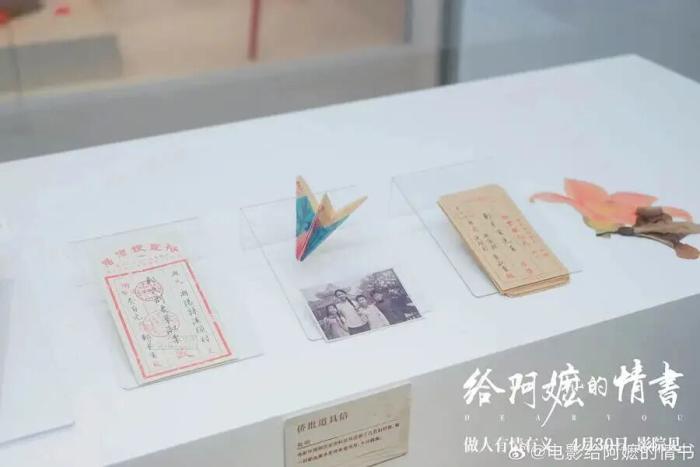
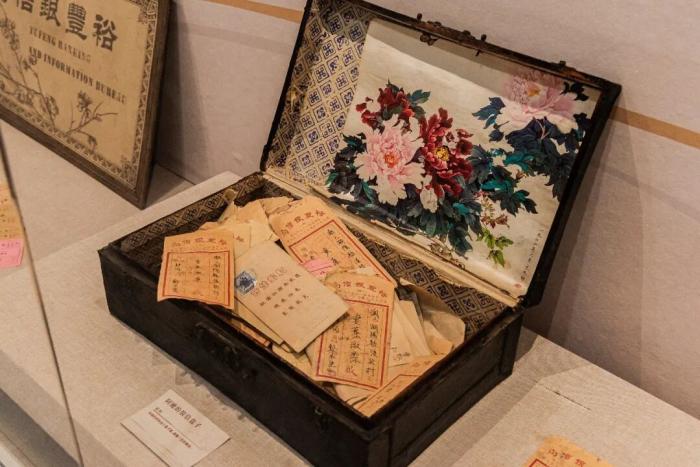
<p>Not a confession shouted in close-up. Not a twist engineered for social media. A letter: folded, carried, delayed, reread, misunderstood, preserved. In the film, the letter is also a remittance, a lifeline and a moral promise. In Teochew and Minnan usage, these overseas Chinese letters with money enclosed or attached were known as <em>qiaopi</em> (侨批), also called <em>yinxin</em> (银信), literally silver letters. Between the nineteenth century and the late twentieth century, they connected migrant workers and merchants in Southeast Asia with families in Chaoshan, Fujian, Wuyi and other hometown regions across southern China.</p>

<p>That old paper infrastructure is the emotional engine of the film. According to a <a href="https://finance.sina.com.cn/wm/2026-05-17/doc-inhyfnpi8618530.shtml">CCTV article reposted by Sina</a>, the story begins with a special family letter that sends a younger descendant to Thailand in search of a grandfather who has been missing for decades. Along the way, the film returns to an earlier generation: men who went “down to the Southern Ocean,” women who held households together, children who grew up with fathers present mostly through paper, money and the recurring phrase that all was well.</p>

<p class="lede">A qiaopi was never only a letter. It was proof that someone across the water was still trying to remain family.</p>

<p>By 17 May 2026, the film had reportedly crossed 500 million yuan in box office including presales, with two consecutive days above 100 million yuan in daily takings. What had begun as a regional, dialect-forward work became one of the season’s most discussed cultural objects. The usual surprise was repeated in article after article: no obvious blockbuster machinery, no dependence on celebrity spectacle, no strong visual-effects hook. Instead, it moved through word of mouth, through audiences telling other audiences that the film had left something quietly lodged in them.</p>

<p>Part of that force comes from the film’s restraint. A <a href="https://finance.sina.cn/2026-05-13/detail-inhxunay0536565.d.html?vt=4">People’s Daily client article reposted by Sina</a> reads the film through its balance between lightness and weight. Its plot turns on large facts: migration, death, poverty, years of deception, a woman sustaining two families across the sea. But its emotional language remains domestic. Food, quilts, winter-solstice rice balls, school fees, a bicycle remembered and finally sent: these are the objects through which love becomes visible.</p>

<p>That is also how many actual qiaopi worked. They were rarely grand literary statements. They were instructions, reassurances, apologies, accounts of money sent and money received. A husband in Siam might report that he was safe and enclose funds. A wife in Chaoshan might reply with news of crops, children, illness, ceremonies, theft, hunger, school, weather. The language could be plain to the point of severity. But the plainness was the point. In societies where open emotional display was often constrained, care traveled under the cover of practical matters.</p>

<p>A <a href="https://finance.sina.com.cn/roll/2026-05-16/doc-inhyawyf2529392.shtml">CCTV collection of letters from the film</a> shows how much feeling is hidden inside ordinary speech. The recurring wish is not ecstasy but peace: eat well, stay warm, do not worry, keep the children in school, stay safe. It is a language of love that refuses to call attention to itself. In that refusal, it becomes almost unbearable.</p>

<figure>
  <img src="/assets/img/love-letter-grandma/hero-qiaopi-film-still.jpg" alt="Film still and qiaopi props from Give Grandma a Love Letter" />
  <figcaption>A qiaopi letter becomes the emotional and historical center of <em>Give Grandma a Love Letter</em>. Image: CCTV/Sina repost.</figcaption>
</figure>

<p>The deeper turn in <em>Give Grandma a Love Letter</em> is that some of the letters are not what they first seem. The figure of Zheng Musheng leaves for Thailand and sends money home through qiaopi. After his death, Xie Nanzhi continues writing in his name to Ye Shurou, sustaining a fragile fiction that is also an act of care. What might have been treated as melodrama becomes, in the accounts around the film, a story of two women bound by grief, responsibility and a long apprenticeship in motherhood. One woman keeps another alive by giving her hope; over time, the exchange itself becomes real enough to shape both lives.</p>

<p>That is why the film’s tenderness has a harder edge than nostalgia. It is not simply saying that the past was purer, or that people once loved better. It is asking what forms of obligation become possible when a community treats trust as a shared inheritance. A <a href="https://www.huxiu.com/article/4858606.html">TechFlow essay republished by Huxiu</a> makes this point through financial history. Qiaopi, it argues, was not only a sentimental archive. It was also a private, cross-border remittance network that operated for more than a century through water-carriers, letter shops, couriers, kinship, hometown ties and reputation.</p>

<p><img src="/assets/img/love-letter-grandma/qiaopi-photo-paper-airplane.jpg" alt="Qiaopi, family photograph and paper airplane props" /></p>

<p>Before modern bank rails reached migrant families, before electronic transfers, before SWIFT became the invisible skeleton of global finance, qiaopi moved money through a dense human system. A worker in Thailand, Singapore, Malaya, Vietnam or elsewhere in Southeast Asia could hand wages and a letter to a trusted intermediary. The message and funds would pass through networks of <em>piju</em> (批局), couriers and local deliverers, eventually arriving at a village household. The return receipt, the reply letter and the social memory of whether someone had kept faith completed the transaction.</p>

<p>TechFlow’s language is deliberately contemporary, comparing qiaopi to decentralized settlement, netting and trust networks. Some of those analogies are rhetorical, and they should be handled carefully. But the underlying point is valuable: qiaopi was not quaint. It was infrastructure built out of social credibility. Its power came from the fact that default was not merely a legal failure; it was a moral and communal collapse. In small places connected by surname, dialect, temple, market and migration route, reputation had weight.</p>

<p>This is where the film becomes larger than film. Chinanews, reposting an article from the WeChat account “小圆规,” placed qiaopi inside a <a href="https://www.chinanews.com.cn/cul/2026/05-26/10628544.shtml">broader reflection on overseas Chinese history</a> and contemporary suspicion toward Chinese diaspora communities. The article notes that qiaopi recorded not only remittances but also schooling, food, sickness, work, parental duty and the building of lives in host societies. It argues that these papers show overseas Chinese as workers, family members, bridge-builders and participants in local economies, not as the flattened figures that appear in hostile political narratives.</p>

<p>That argument matters, though it also deserves nuance. The Teochew diaspora was never one thing. Migrants were laborers, traders, shopkeepers, religious donors, political actors, restaurant families, factory owners, farmers, writers and children who grew up between languages. Some assimilated quickly; some held tight to hometown associations; many did both in different ways. Thailand, Cambodia, Vietnam, Singapore, Malaysia, France, the Americas, Hong Kong and the Chaoshan homeland each produced different versions of being gaginan (胶己人), “our own people.” No single film can contain them all.</p>

<p>But a film can reopen a door.</p>

<p><img src="/assets/img/love-letter-grandma/qiaopi-prop.jpg" alt="Qiaopi prop from Give Grandma a Love Letter" /></p>

<p><em>Give Grandma a Love Letter</em> seems to have done that by returning to the smallest unit of diaspora history: not the nation, not the clan hall, not the heroic pioneer, but the family message. The qiaopi is intimate enough to hold a mother’s worry and formal enough to become an archival document. It carries money but also carries grammar, food memory, names, kinship hierarchy, seasonal ritual and the ache of distance. It is proof that migration was not only departure. It was also maintenance.</p>

<p>Perhaps that is why the film’s popularity feels culturally significant. It tells contemporary audiences, many of whom live in a world of instant messages and disappearing images, that slowness once had its own moral drama. To wait for a letter was to live inside uncertainty. To write one was to choose what pain to reveal and what pain to hide. To send money home was not only economic support; it was a way of remaining a husband, daughter, son, father or mother across water.</p>

<p>There is a scene implied by all these articles even if one has not yet seen the film: someone opens a letter and reads not only the words, but the life that made the words necessary. That may be the secret of the film’s reach. It takes an old Teochew and overseas Chinese practice and makes it legible as a modern feeling. It reminds viewers that love is not always a declaration. Sometimes it is a remittance wrapped in paper. Sometimes it is a lie told to keep another person standing. Sometimes it is a winter-solstice rice ball saved for someone who may never come home.</p>

<p>And sometimes, decades later, it becomes a movie that sends a whole country back to its drawers, trunks, albums and unfinished family questions.</p>]]></content><author><name>Teochew.net</name></author><category term="qiaopi" /><category term="diaspora" /><category term="film" /><category term="Teochew" /><category term="Chaoshan" /><category term="Thailand" /><summary type="html"><![CDATA[A culture-magazine reading of Give Grandma a Love Letter, qiaopi and the Teochew diaspora memory behind its breakout reception.]]></summary><media:thumbnail xmlns:media="http://search.yahoo.com/mrss/" url="https://www.teochew.net/assets/img/love-letter-grandma/letter-still.jpg" /><media:content medium="image" url="https://www.teochew.net/assets/img/love-letter-grandma/letter-still.jpg" xmlns:media="http://search.yahoo.com/mrss/" /></entry><entry><title type="html">胶己人: the two words that turn a stranger into family</title><link href="https://www.teochew.net/gaginan-our-own-people/" rel="alternate" type="text/html" title="胶己人: the two words that turn a stranger into family" /><published>2026-05-20T00:00:00+08:00</published><updated>2026-05-20T00:00:00+08:00</updated><id>https://www.teochew.net/gaginan-our-own-people</id><content type="html" xml:base="https://www.teochew.net/gaginan-our-own-people/"><![CDATA[<p>There is a phrase that travels wherever Teochew people go. Two syllables in Mandarin, written <strong>胶己人</strong>, pronounced <em>ga-gi-nang</em> in the Teochew tongue: <strong>our own people</strong>.</p>

<p>It is not a grand word. You will hear it across a market stall in Shantou, in a clan-association hall in Singapore, in a noodle shop in the 13th arrondissement of Paris. Someone discovers that you, too, are Teochew, and the temperature of the conversation changes. <em>Gaginan.</em> One of us.</p>

<p class="lede">To be gaginan is less about where you were born than about a shared inheritance — of language, of food, of a particular stubborn warmth.</p>

<h2 id="a-people-defined-by-leaving">A people defined by leaving</h2>

<p>The Teochew homeland is small: the <strong>Chaoshan</strong> region of eastern Guangdong, three cities — Chaozhou, Shantou (old Swatow) and Jieyang — pressed between mountains and the South China Sea. For centuries that geography pushed people outward. They boarded junks and steamers from Swatow and scattered across Southeast Asia and beyond.</p>

<p>Today there are roughly as many Teochew outside the homeland as within it. The largest community is in <strong>Thailand</strong>, where Teochew is the ancestral tongue of most Thai Chinese. There are Teochew in Singapore and Malaysia, in Cambodia and Vietnam, in <strong>France</strong>, the United States, Canada and Australia. A people defined, in some ways, by leaving — and by the determination not to lose one another in the process.</p>

<h2 id="why-this-site-exists">Why this site exists</h2>

<p>Teochew.net is a home for those stories. Not a museum, and not a single community’s account, but a gathering place for the whole <em>gaginan</em> world — homeland and diaspora, old and young, those fluent in the language and those reaching back toward it.</p>

<p>We will tell stories of food and family, of the eight-tone language and the all-night opera, of the bridge at Chaozhou and the Chinatowns built an ocean away. We will try to be inclusive of every Teochew community, wherever it took root.</p>

<p>If you are gaginan — or simply curious about us — welcome. Pull up a stool. The tea is already brewing.</p>]]></content><author><name>Teochew.net</name></author><category term="gaginan" /><category term="identity" /><category term="diaspora" /><category term="language" /><summary type="html"><![CDATA[Gaginan, 胶己人, “our own people,” is the phrase that binds the Teochew world together across oceans and generations.]]></summary><media:thumbnail xmlns:media="http://search.yahoo.com/mrss/" url="https://www.teochew.net/assets/img/gaginan.svg" /><media:content medium="image" url="https://www.teochew.net/assets/img/gaginan.svg" xmlns:media="http://search.yahoo.com/mrss/" /></entry><entry><title type="html">Muê: the porridge that holds a family together</title><link href="https://www.teochew.net/mue-teochew-porridge/" rel="alternate" type="text/html" title="Muê: the porridge that holds a family together" /><published>2026-05-18T00:00:00+08:00</published><updated>2026-05-18T00:00:00+08:00</updated><id>https://www.teochew.net/mue-teochew-porridge</id><content type="html" xml:base="https://www.teochew.net/mue-teochew-porridge/"><![CDATA[<p>Ask a Teochew person what they ate growing up and, sooner or later, they will say <strong>muê</strong> (糜) — a loose, watery rice porridge that sits somewhere between soup and rice, the grains still whole and swimming.</p>

<p>Cantonese congee is cooked down to a smooth cream. Teochew muê is the opposite: deliberately thin, the rice barely broken, served so hot it has to be sipped from the edge of the spoon. It is breakfast, it is supper, it is what you eat when you are unwell and what you eat when there is nothing else.</p>

<h2 id="the-constellation-around-the-bowl">The constellation around the bowl</h2>

<p>The porridge itself is plain on purpose, because the meal is really about what surrounds it — the <strong>杂咸</strong> (<em>zah-giam</em>), the little salty things. A Teochew table sets out a constellation of them:</p>

<ul>
  <li>Salted radish, chopped fine and fried with egg</li>
  <li>Preserved vegetables, dark and pungent</li>
  <li>Steamed fish, kept simple</li>
  <li>Braised peanuts</li>
  <li>A wedge of salted duck egg, the yolk orange and oily</li>
</ul>

<p>You take a mouthful of porridge, then a tiny, intense bite of something salty, and back again. It is a rhythm more than a recipe.</p>

<h2 id="frugal-and-proud-of-it">Frugal, and proud of it</h2>

<p>Muê carries the memory of a region that knew scarcity. A little rice could be stretched with water to feed many; the salty side dishes made it go further still. That thriftiness hardened into taste. Even now, when there is plenty, the Teochew return to muê — not as hardship food but as comfort, the flavour of home.</p>

<p>In Bangkok and Singapore you can still find late-night <strong>porridge stalls</strong> run by Teochew families, the steel pots steaming past midnight. Order the muê. Ask for the side dishes. You will be eating the most Teochew meal there is.</p>]]></content><author><name>Teochew.net</name></author><category term="muê" /><category term="porridge" /><category term="cuisine" /><category term="breakfast" /><summary type="html"><![CDATA[Teochew muê is a loose, watery rice porridge eaten with a constellation of small salty dishes — the heart of Chaoshan home cooking.]]></summary><media:thumbnail xmlns:media="http://search.yahoo.com/mrss/" url="https://www.teochew.net/assets/img/mue.svg" /><media:content medium="image" url="https://www.teochew.net/assets/img/mue.svg" xmlns:media="http://search.yahoo.com/mrss/" /></entry><entry><title type="html">Eight tones and a thousand years: meeting the Teochew language</title><link href="https://www.teochew.net/teochew-language-eight-tones/" rel="alternate" type="text/html" title="Eight tones and a thousand years: meeting the Teochew language" /><published>2026-05-15T00:00:00+08:00</published><updated>2026-05-15T00:00:00+08:00</updated><id>https://www.teochew.net/teochew-language-eight-tones</id><content type="html" xml:base="https://www.teochew.net/teochew-language-eight-tones/"><![CDATA[<p>The Teochew language is not a dialect of Mandarin. It is a branch of <strong>Southern Min</strong> (Minnan), a cousin of Hokkien, and it sounds almost nothing like the standard Chinese taught in schools. Roughly <strong>10 million</strong> people speak it in the Chaoshan homeland, and several million more across the diaspora.</p>

<p>What makes it remarkable to linguists is how much it has <em>kept</em>. Teochew preserves features of older Chinese that Mandarin lost — including the clipped <strong>entering tone</strong> (<em>rusheng</em>), syllables that end in a hard stop. Where Mandarin flattened to four tones, Teochew holds <strong>eight</strong>.</p>

<h2 id="saying-teochew-in-teochew">Saying “Teochew” in Teochew</h2>

<p>Even the name shifts. In Mandarin the region is <em>Cháozhōu</em>. In the language itself it is closer to:</p>

<p class="lede"><ruby>潮州<rt>Tiê-chiu</rt></ruby></p>

<p>That gap — between how the word looks in Mandarin and how it sounds at home — is the whole story in miniature.</p>

<h2 id="pengim-writing-the-sounds-down">Peng’im: writing the sounds down</h2>

<p>Because Teochew is primarily a <em>spoken</em> language, learners lean on a romanisation system called <strong>Peng’im</strong> (拼音, “spelled sounds”) to capture pronunciation and tone. It lets you write <em>ga-gi-nang</em> (胶己人, “our own people”) in a way another learner can actually read aloud.</p>

<h2 id="a-language-under-pressure">A language under pressure</h2>

<p>Like many regional Chinese languages, Teochew is under strain. Decades of Mandarin-first schooling and media mean many younger Teochew — especially in the diaspora — understand the language but no longer speak it fluently. Grandparents and grandchildren can find themselves without shared words.</p>

<p>That loss is exactly why preservation matters. A language is not only grammar and tones; it is the carrier of proverbs, songs, the names of dishes, the texture of jokes. To keep Teochew alive is to keep a thousand years of voices in the room.</p>

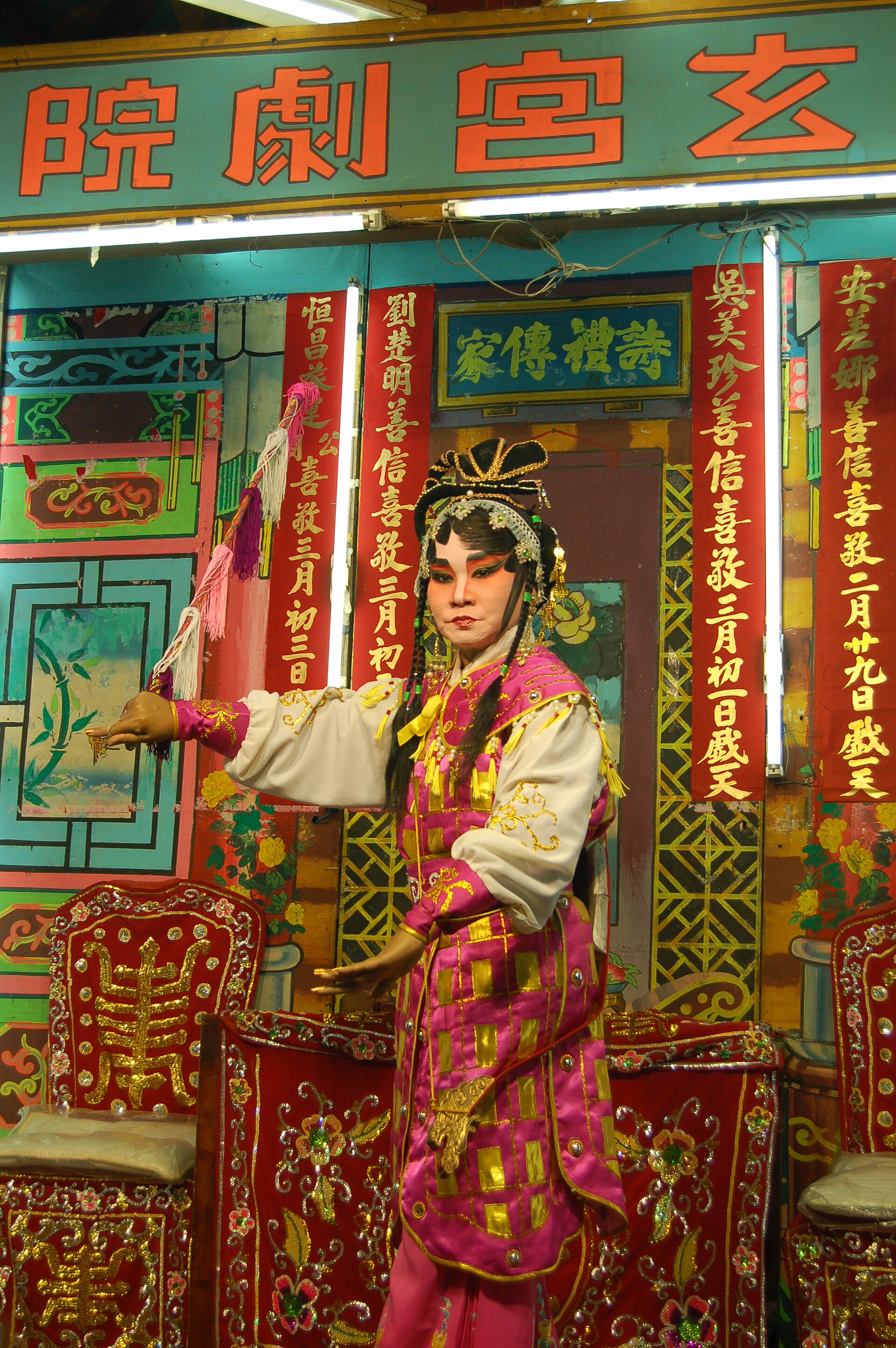
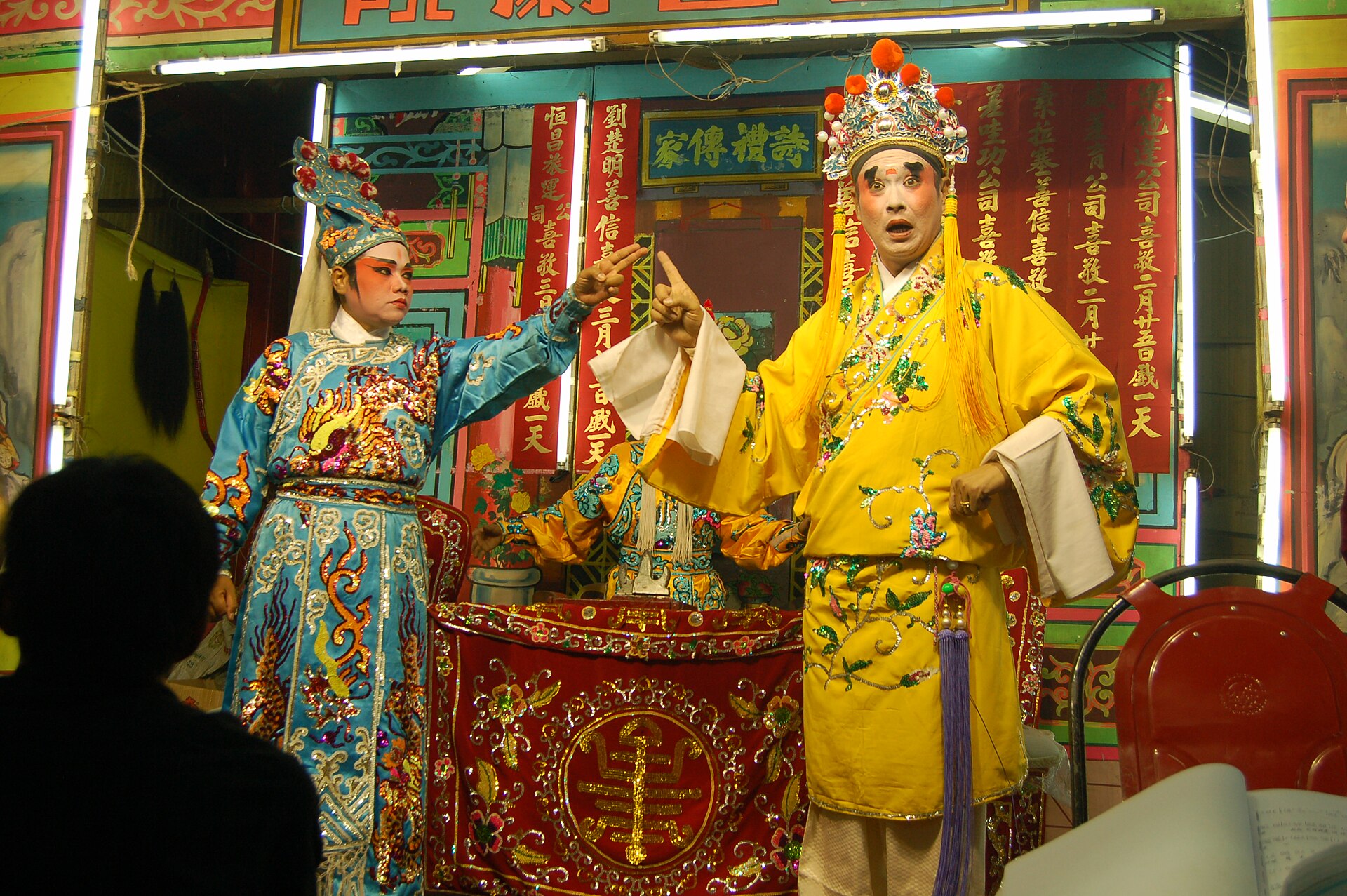
<p><em>This is the first of an ongoing series. Future pieces will cover Peng’im basics, everyday phrases, and how Teochew differs from Hokkien.</em></p>]]></content><author><name>Teochew.net</name></author><category term="language" /><category term="peng-im" /><category term="southern-min" /><category term="tones" /><summary type="html"><![CDATA[An introduction to the Teochew language — a Southern Min variety with eight tones that preserves archaic Chinese sounds.]]></summary><media:thumbnail xmlns:media="http://search.yahoo.com/mrss/" url="https://www.teochew.net/assets/img/language.svg" /><media:content medium="image" url="https://www.teochew.net/assets/img/language.svg" xmlns:media="http://search.yahoo.com/mrss/" /></entry><entry><title type="html">The all-night glow of Teochew opera</title><link href="https://www.teochew.net/teochew-opera-all-night-glow/" rel="alternate" type="text/html" title="The all-night glow of Teochew opera" /><published>2026-05-12T00:00:00+08:00</published><updated>2026-05-12T00:00:00+08:00</updated><id>https://www.teochew.net/teochew-opera-all-night-glow</id><content type="html" xml:base="https://www.teochew.net/teochew-opera-all-night-glow/"><![CDATA[<p>On a warm night during a temple festival, in a courtyard somewhere from Chaozhou to Bangkok, a stage is built from scaffolding and cloth. Lanterns go up. A small orchestra of gongs, drums and the reedy <em>suona</em> tunes itself. And then, until very late, <strong>Teochew opera</strong> (潮剧) unfolds.</p>

<p>It is one of the oldest living theatre traditions in China — more than <strong>500 years</strong> old, with roots in the <em>Nanxi</em> opera of the Song and Yuan dynasties. It grew out of local folk songs and dances, and over centuries became its own form: high, ornamented singing in the Teochew language, stylised movement, acrobatics, and costumes heavy with <strong>embroidery and gold thread</strong>.</p>

<h2 id="theatre-for-gods-and-people">Theatre for gods and people</h2>

<p>Traditionally, opera was not only entertainment. Performances were staged for the <strong>gods</strong> — to thank a deity, to mark a temple’s festival, to ask for protection. The audience of villagers watched from the same courtyard. That double address, to heaven and to neighbours at once, still shapes the art.</p>

<h2 id="a-travelling-tradition">A travelling tradition</h2>

<p>When the Teochew left home, the opera went with them. Troupes have performed in more than <strong>twenty countries</strong>, and diaspora communities in Thailand, Singapore, Malaysia and beyond kept the tradition alive — sometimes more faithfully than the homeland did during leaner years.</p>

<p>Today the audiences are greying, and the all-night performances are rarer. But supported by clan associations and a new wave of younger performers, the gongs still sound. If you ever find a temple festival with a stage going up at dusk, stay. Let the costumes catch the light. This is one of the great inheritances of the gaginan.</p>]]></content><author><name>Teochew.net</name></author><category term="opera" /><category term="performance" /><category term="festivals" /><category term="heritage" /><summary type="html"><![CDATA[Teochew opera, more than 500 years old, blends song, acrobatics and embroidered spectacle — and still plays in temple courtyards across the diaspora.]]></summary><media:thumbnail xmlns:media="http://search.yahoo.com/mrss/" url="https://www.teochew.net/assets/img/opera.svg" /><media:content medium="image" url="https://www.teochew.net/assets/img/opera.svg" xmlns:media="http://search.yahoo.com/mrss/" /></entry><entry><title type="html">Crossing the Guangji Bridge, where Chaozhou meets the river</title><link href="https://www.teochew.net/guangji-bridge-chaozhou/" rel="alternate" type="text/html" title="Crossing the Guangji Bridge, where Chaozhou meets the river" /><published>2026-05-09T00:00:00+08:00</published><updated>2026-05-09T00:00:00+08:00</updated><id>https://www.teochew.net/guangji-bridge-chaozhou</id><content type="html" xml:base="https://www.teochew.net/guangji-bridge-chaozhou/"><![CDATA[<p>In the old city of <strong>Chaozhou</strong>, the <strong>Guangji Bridge</strong> (广济桥) has crossed the Han River for more than <strong>800 years</strong>. Begun in the Southern Song dynasty, it is counted among the oldest bridges in China — and one of the strangest, in the best way.</p>

<p>Most of it is solid stone, a procession of piers topped with small pavilions. But the central section could never be finished in stone; the current was too strong. So the builders did something ingenious: they linked <strong>wooden boats</strong> across the gap to form a floating span. Each evening the boats could be drawn aside to let river traffic through, and re-linked at dawn. A bridge that opens in the middle.</p>

<h2 id="a-working-monument">A working monument</h2>

<p>For centuries Guangji Bridge was not a monument but infrastructure — the way goods and people moved in and out of Chaozhou, lined with shops and stalls until it was a market in itself. There is a local saying that to come to Chaozhou and not see the bridge is to have not really come at all.</p>

<p>Restored and floodlit, the bridge today is the postcard image of the homeland — the place diaspora families photograph when they return to find where their grandparents came from. Stand on it at dusk, watch the boats of the central span swing into place, and you are standing on a thousand small returns.</p>]]></content><author><name>Teochew.net</name></author><category term="chaozhou" /><category term="history" /><category term="architecture" /><category term="homeland" /><summary type="html"><![CDATA[The Guangji Bridge in Chaozhou is one of China's oldest, famous for a central span made of linked boats that can open to let traffic pass.]]></summary><media:thumbnail xmlns:media="http://search.yahoo.com/mrss/" url="https://www.teochew.net/assets/img/bridge.svg" /><media:content medium="image" url="https://www.teochew.net/assets/img/bridge.svg" xmlns:media="http://search.yahoo.com/mrss/" /></entry><entry><title type="html">From Swatow to Bangkok: how the Teochew built a Chinatown</title><link href="https://www.teochew.net/swatow-to-bangkok-chinatown/" rel="alternate" type="text/html" title="From Swatow to Bangkok: how the Teochew built a Chinatown" /><published>2026-05-06T00:00:00+08:00</published><updated>2026-05-06T00:00:00+08:00</updated><id>https://www.teochew.net/swatow-to-bangkok-chinatown</id><content type="html" xml:base="https://www.teochew.net/swatow-to-bangkok-chinatown/"><![CDATA[<p>The largest Teochew community in the world is not in the Chaoshan homeland. It is in <strong>Thailand</strong> — where the Teochew form the majority of the country’s ethnic Chinese, and where their language became the dominant Chinese tongue.</p>

<p>The route ran from the port of <strong>Swatow</strong> (today’s Shantou). Through the 19th and early 20th centuries, waves of Teochew migrants boarded steamers and sailed south, many landing at the mouth of the Chao Phraya and settling in <strong>Bangkok</strong>. They arrived with little and went to work — as labourers, traders, shopkeepers, rice merchants.</p>

<h2 id="yaowarat">Yaowarat</h2>

<p>The heart of it is <strong>Yaowarat Road</strong>, Bangkok’s Chinatown: a dense, glittering stretch of gold shops, herbal-medicine halls, shark’s-fin restaurants and, after dark, some of the best street food in Asia. Much of it is Teochew in origin. The <strong>rice trade</strong> in particular became a Teochew stronghold, and from rice and commerce came some of Thailand’s most powerful business families.</p>

<h2 id="more-than-commerce">More than commerce</h2>

<p>The community brought its institutions with it: clan associations, Chinese-language schools, temples and shrines, charitable foundations. It brought <strong>muê</strong> and braised goose and gongfu tea. It brought Teochew opera to Thai temple festivals. Over generations the community also became deeply, genuinely <strong>Thai</strong> — intermarried, fluent in Thai, woven into national life — while keeping a thread back to Chaoshan.</p>

<p>That dual belonging is the diaspora condition in miniature: fully of the new home, still quietly <strong>gaginan</strong>. The story of Bangkok’s Teochew is one we will keep returning to — through its food, its families and its temples.</p>]]></content><author><name>Teochew.net</name></author><category term="thailand" /><category term="bangkok" /><category term="migration" /><category term="yaowarat" /><summary type="html"><![CDATA[Thailand is home to the world's largest Teochew community. The story runs from the port of Swatow to the gold shops of Bangkok's Yaowarat.]]></summary><media:thumbnail xmlns:media="http://search.yahoo.com/mrss/" url="https://www.teochew.net/assets/img/bangkok.svg" /><media:content medium="image" url="https://www.teochew.net/assets/img/bangkok.svg" xmlns:media="http://search.yahoo.com/mrss/" /></entry><entry><title type="html">Grand spectacle, empty seats: the two faces of Teochew opera in Bangkok</title><link href="https://www.teochew.net/teochew-opera-bangkok-survival-spectacle/" rel="alternate" type="text/html" title="Grand spectacle, empty seats: the two faces of Teochew opera in Bangkok" /><published>2025-08-01T00:00:00+08:00</published><updated>2025-08-01T00:00:00+08:00</updated><id>https://www.teochew.net/teochew-opera-bangkok-survival-spectacle</id><content type="html" xml:base="https://www.teochew.net/teochew-opera-bangkok-survival-spectacle/"><![CDATA[<p>There is a scene buried in a <a href="https://english.news.cn/20220406/03ce27300d4948cf999c3b7c8d3f09f6/c.html">2022 Xinhua report</a> that has stayed with me. A professional Teochew opera troupe in Bangkok. Qing Nang Yu Lou Chun, over 80 years old, sometimes performs before an audience smaller than the cast itself. Thirty actors on stage. Twenty people in the seats. The lights go up anyway. The drums strike. The painted faces hold their expression.</p>

<p>That image is the real story of Teochew opera in Thailand. And it is the story that got almost completely drowned out three years later when, in July 2025, CP Group brought the Guangdong Teochew Theatre’s Number One Troupe to ICONSIAM’s True Icon Hall for a week of performances that read, in every press release, like a cultural triumph. According to <a href="https://www.nationthailand.com/pr-news/pr-news/40052348">The Nation Thailand</a>, sixteen unique shows, seats priced up to 2,500 baht, with CP Group and major Thai-Chinese business institutions prominently attached. A spectacular, by any measure.</p>

<p>Both events are described, in the coverage that surrounds them, as preservation. I am not sure both deserve the word.</p>

<hr />

<h2 id="the-inconvenient-baseline">The inconvenient baseline</h2>

<p>To understand what CP Group did at ICONSIAM, you first have to sit with what <a href="https://english.news.cn/20220406/03ce27300d4948cf999c3b7c8d3f09f6/c.html">Xinhua documented in 2022</a>, later republished by <a href="https://www.chinadaily.com.cn/a/202204/09/WS62515092a310fd2b29e5601c.html">China Daily</a> and widely read across the Thai-Chinese community. The picture is not complicated, but it is uncomfortable.</p>

<p>Qing Nang Yu Lou Chun was once a full troupe. In the 1990s, veteran performer Xu Qing’an recalls, they had over a hundred actors and thousands of visitors every show. By 2022, thirty actors remained. Annual performances had fallen from 300 to under 100. That was already a pandemic-accelerated decline of something that had been shrinking before COVID arrived. The audiences who still came were overwhelmingly elderly Thai-Chinese immigrants. Younger Thai-Chinese, third and fourth generation, Thai-educated and Thai-speaking, watched the costumes with appreciation and understood nothing the characters were saying.</p>

<figure>
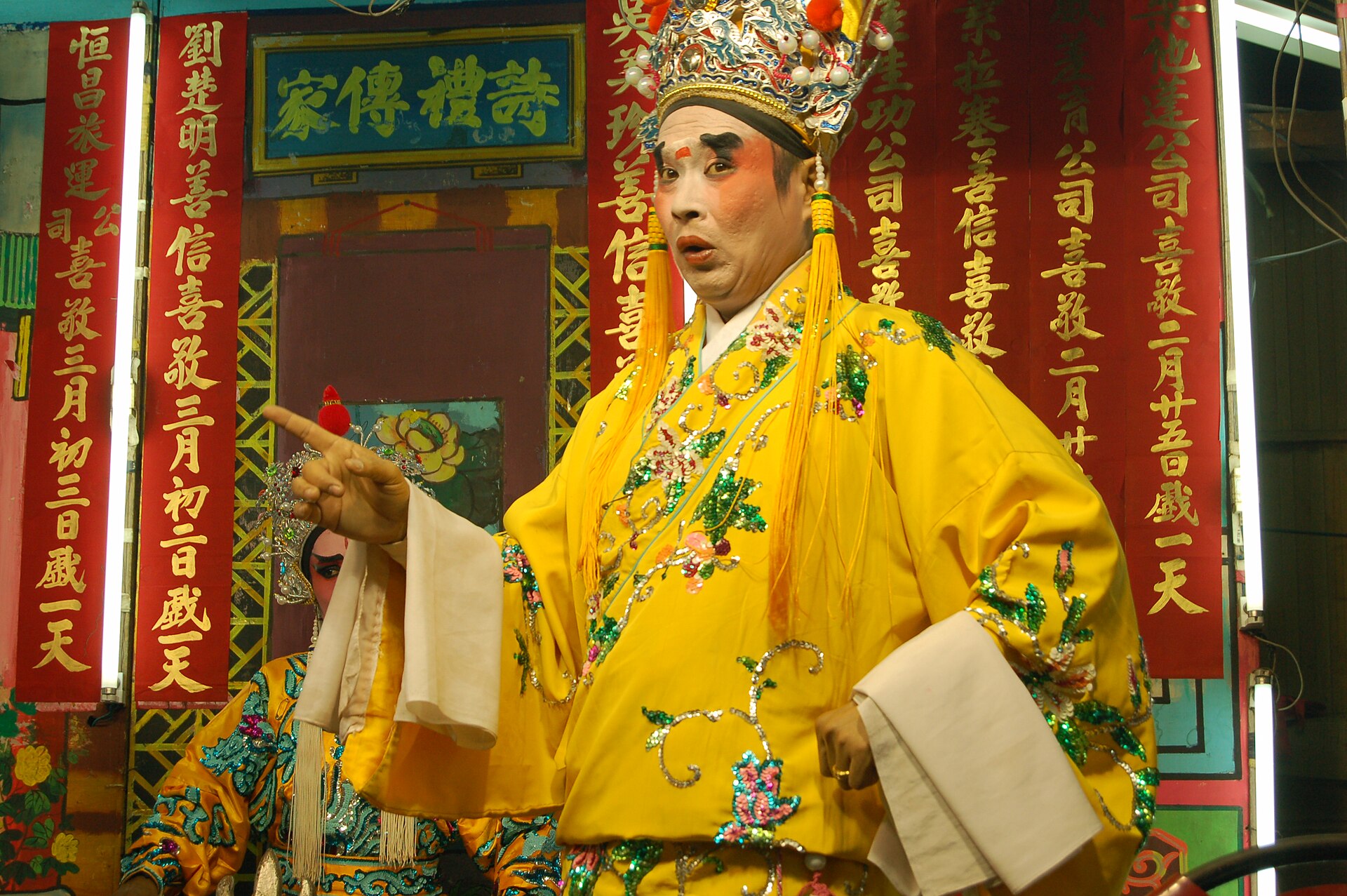
<img src="/assets/img/opera-bangkok-performer.jpg" alt="A Teochew opera performer mid-scene in Bangkok, expressive and in full costume" loading="lazy" />
<figcaption>A Bangkok Teochew opera performer mid-scene. The craft is undimmed. The audiences are not what they were. Photo: Andrew Otto / Wikimedia Commons, CC BY-SA 2.0.</figcaption>
</figure>

<p>This is the language problem, and it is structural. The dialect that Teochew opera is sung in is not Mandarin, not Thai, not even standard Cantonese. It is Teochew, an eight-tone Southern Min variety that most young people in the Bangkok Chinese community no longer speak. You can add subtitles, as the 2025 ICONSIAM performances did for both Thai and Chinese. But subtitles are a concession to distance, not a cure for it. You are already watching something that was never meant to be read.</p>

<p>Zhuang Meilong, the 81-year-old founder of the Thai-Chinese Dramatic Arts Institute, told the Xinhua reporter she was working on translations into Thai and planning to open an opera school in Bangkok. Both plans sound sensible. The available reports do not show whether either has materialised at scale.</p>

<hr />

<h2 id="the-community-tier-a-quieter-effort">The community tier: a quieter effort</h2>

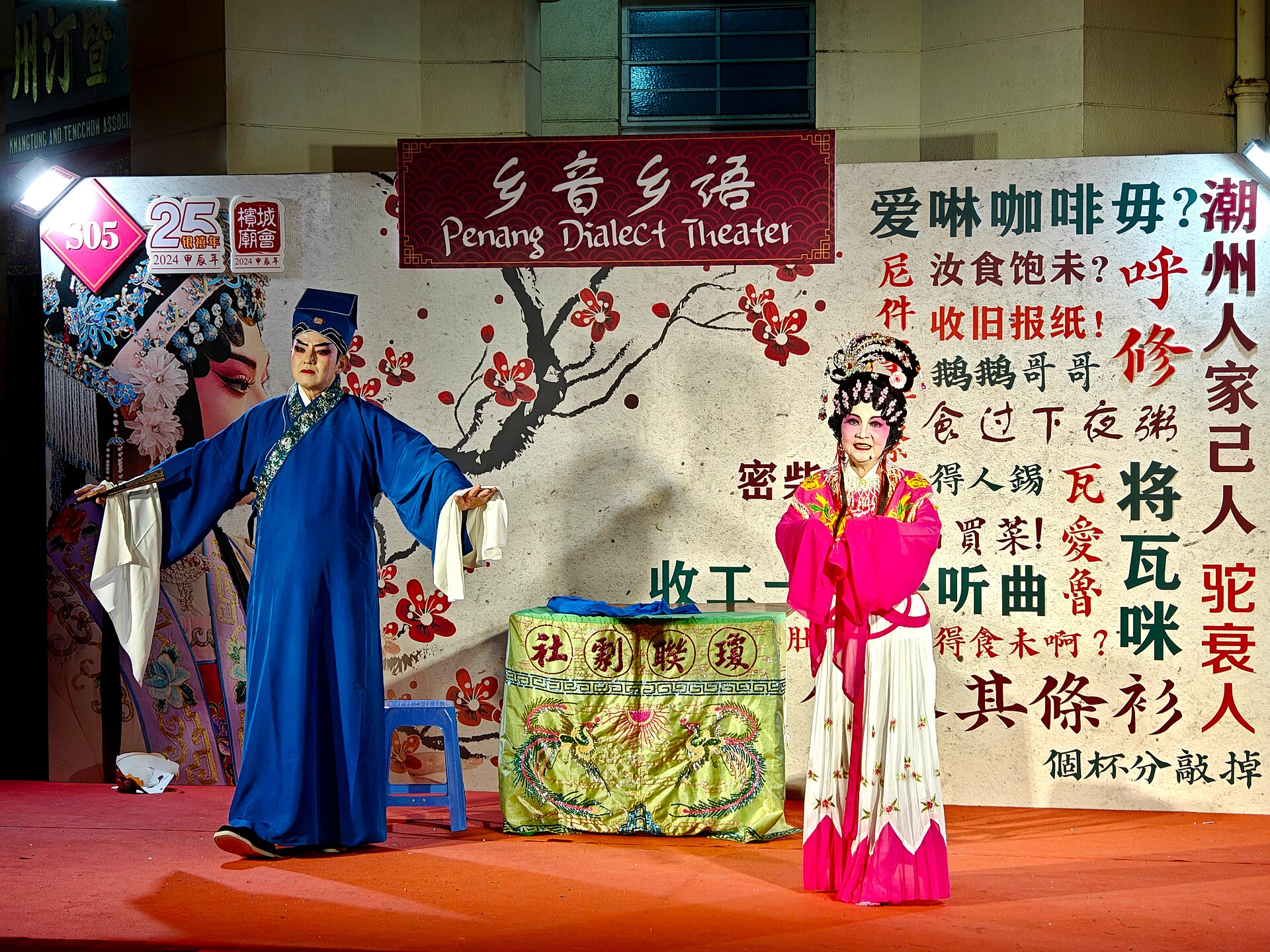
<p>A year before the ICONSIAM extravaganza, something smaller and, I think, more instructive happened. In June 2024, Thailand’s Ministry of Culture, the Teochew Association of Thailand, the Thai-Chinese Chamber of Commerce, and the Teng Hai Association co-presented a <a href="https://www.pattayamail.com/thailandnews/teochew-opera-festival-of-siam-in-bangkok-june-12-16-462936">free five-day Teochew opera festival</a> at the Teochew Association’s own hall in Bang Rak, Bangkok. The troupe came from Chenghai in Guangdong Province, a more community-scale counterpart to the later Guangdong Teochew Theatre production. No Huawei sponsorship. No 2,500-baht tickets. Admission free, every night for five days.</p>

<p>Dr. Sangchai Sothivorakul, President of the Chinese Opera Association, described it as “dazzling” and spoke about broadening the repertoire beyond war epics toward themes of gratitude, education, and cultural heritage. There is something quietly important in that reframing. It is an acknowledgement, even if indirect, that the form needs to speak to people who are not already converts. That the goal is not to preserve an object in glass but to keep it breathing.</p>

<figure>
<img src="/assets/img/opera-penang-2024.jpg" alt="Teochew opera performers in full costume on an outdoor stage in George Town, Penang, 2024" loading="lazy" />
<figcaption>Teochew opera at a community festival in George Town, Penang, 2024. Open-air, free entry, performed for the neighbourhood. Photo: HundenvonPenang / Wikimedia Commons, CC BY-SA 4.0.</figcaption>
</figure>

<p>The venue matters too. The Teochew Association of Thailand’s hall in Bang Rak is not a luxury shopping centre. It is a community institution. The kind of building that has hosted clan meetings, fundraisers for flooded villages back in Chaoshan, the funerals of old men who arrived in Bangkok with nothing. Putting a free opera there is different in kind from putting a ticketed one at ICONSIAM, even if the art form on stage is the same.</p>

<p>I am not dismissing the ICONSIAM production. I am saying the two events are doing different things, and we should not use the same word for both.</p>

<hr />

<h2 id="the-spectacular-and-what-it-is-actually-for">The spectacular, and what it is actually for</h2>

<p>Let us be honest about the CP Group festival. <a href="https://www.nationthailand.com/pr-news/pr-news/40052348">The Nation Thailand’s announcement</a> and <a href="https://www.nationthailand.com/live/short/30380754">their accompanying video report</a> describe it in the language of cultural diplomacy: the 50th anniversary of Thailand-China bilateral relations, “a cultural bridging spectacular,” love, loyalty, sacrifice, virtue. These are not wrong descriptions. Teochew opera has been a cultural bridge since the first immigrants arrived at the mouth of the Chao Phraya carrying it in their memory.</p>

<p>But the sixteen organisations listed as co-presenters are not cultural charities. CP Group, Thai Beverage, the Federation of Thai Industries, Bangkok Bank, Huawei, ZTE, Midea, Tencent. They are commercial entities with substantial interests in the health of the Thailand-China relationship. When Suphachai Chearavanont, whose family are themselves of Teochew descent, brings the Number One Troupe to the most visible venue in Bangkok, that is a statement about business relationships, diplomatic alignment, and the projection of a particular identity, as much as it is about art. None of which, I want to be clear, is a reason to dismiss it. Patronage has always been entangled with power. The operas being performed, with their themes of loyalty and moral rectitude, were themselves designed, in part, as instruments of social cohesion.</p>

<figure>
<img src="/assets/img/opera-bangkok-horse.jpg" alt="A Teochew opera warrior-role performer holding a staff to represent a horse, in elaborate painted face and headdress" loading="lazy" />
<figcaption>"The staff represents a horse." A warrior role in Bangkok Chinese Opera. The visual language of the form crosses verbal barriers even as the spoken dialect fades. Photo: Andrew Otto / Wikimedia Commons, CC BY-SA 2.0.</figcaption>
</figure>

<p>What concerns me is narrower. The ICONSIAM production brings the finest available troupe from mainland China and presents a glossy version of Teochew opera to an audience who paid up to 2,500 baht for the privilege. That is wonderful, as a one-week event. But the troupe flies home. The community troupes in Bangkok are still there on July 17th. The ones with thirty actors, the ones that sometimes play to emptier seats than they have performers, still struggling for audiences and funding and young recruits.</p>

<p>Does one feed the other? I genuinely do not know. There is an argument that a high-profile production raises the prestige of the form and draws curious newcomers who then find their way to community performances. I hope that is true. But there is also an argument that it creates a parallel track. A flashy import that fulfills everyone’s cultural obligation for the year and lets the actual local ecosystem continue to decay unnoticed.</p>

<hr />

<h2 id="what-suluan-chen-knows">What Suluan Chen knows</h2>

<p>The human detail I keep returning to is a woman named Suluan Chen, sixty-six years old, mentioned briefly in the Xinhua piece. She began performing at eight. Not because she chose it. Her parents, unable to afford her schooling, placed her with a troupe through an indenture arrangement. She has been performing ever since, across the full arc of what Teochew opera has been in Thailand: the golden years, the slow audience attrition, the pandemic, the current precarity.</p>

<p>She is not quoted saying whether the ICONSIAM festival will save anything. She is just there, still performing, in her sixties, for audiences that are sometimes very small.</p>

<figure>
<img src="/assets/img/opera-bangkok-closeup.jpg" alt="A Teochew opera performer in full makeup and golden headdress, a close and intense stage portrait" loading="lazy" />
<figcaption>Bangkok Chinese Opera, a performer in full makeup and headdress. Behind the face paint is a professional who has spent a lifetime in the form, often for audiences far smaller than the craft deserves. Photo: Andrew Otto / Wikimedia Commons, CC BY-SA 2.0.</figcaption>
</figure>

<p>That is what preservation looks like at ground level. Not sixteen shows with state-of-the-art lighting and corporate sponsors. One woman, a troupe of thirty, a stage, and the discipline to go on anyway. The grand spectacle can share the name “Teochew opera” with what Suluan Chen does, but they are not the same endeavour, and they do not face the same risks.</p>

<hr />

<h2 id="what-would-actually-help">What would actually help</h2>

<p>I am not a pessimist about any of this. Three separate Teochew opera events were covered in English-language media between 2022 and 2025: the Xinhua survival report, the 2024 Bang Rak free festival, the 2025 ICONSIAM spectacle. That tells me the conversation is live, the institutions are still standing, and people still care. That is not nothing.</p>

<p>But if the goal is genuinely to keep Teochew opera alive in Thailand rather than to keep it available as an occasional luxury experience or a diplomatic prop, then the work is specific. Zhuang Meilong named it in 2022: translation into Thai and a school. Young performers trained locally, performing stories that a Thai-speaking audience can follow without reading a subtitle strip. That is unglamorous work. It will not produce a press release listing fourteen co-sponsors. But it is what the form actually needs.</p>

<p>The Chearavanont family’s Teochew roots are not irrelevant here. If CP Group’s patronage flowed not only toward a week at ICONSIAM but toward the institutional structures that Zhuang Meilong described, sustained funding for community troupes, a real school, a translation programme, that would be a legacy. A week of performances, however magnificent, is a memory.</p>

<p>Teochew opera has been sung in Bangkok for over eighty years. It has survived poverty, war, assimilation, a pandemic, and the inexorable drift of generations away from a dialect their grandparents brought across the sea. It deserves more than being saved twice a year for different audiences. It deserves the boring, structural, unglamorous work that actually keeps things alive.</p>

<p>Suluan Chen knew that at eight years old, even if she had no choice in the matter.</p>]]></content><author><name>Alex Kei</name></author><category term="opera" /><category term="thailand" /><category term="bangkok" /><category term="diaspora" /><category term="preservation" /><category term="culture" /><summary type="html"><![CDATA[Two very different pictures of Teochew opera in Bangkok: a community troupe in decline and a corporate spectacle at ICONSIAM. Both raise uncomfortable questions about what preservation actually means.]]></summary><media:thumbnail xmlns:media="http://search.yahoo.com/mrss/" url="https://www.teochew.net/assets/img/opera-bangkok-stage.jpg" /><media:content medium="image" url="https://www.teochew.net/assets/img/opera-bangkok-stage.jpg" xmlns:media="http://search.yahoo.com/mrss/" /></entry></feed>