Kueh: the pressed rice cakes that mark every Teochew season
From the pink peach of âng tô kueh to the herb-green of Qingming, a Teochew year can be measured in 粿.
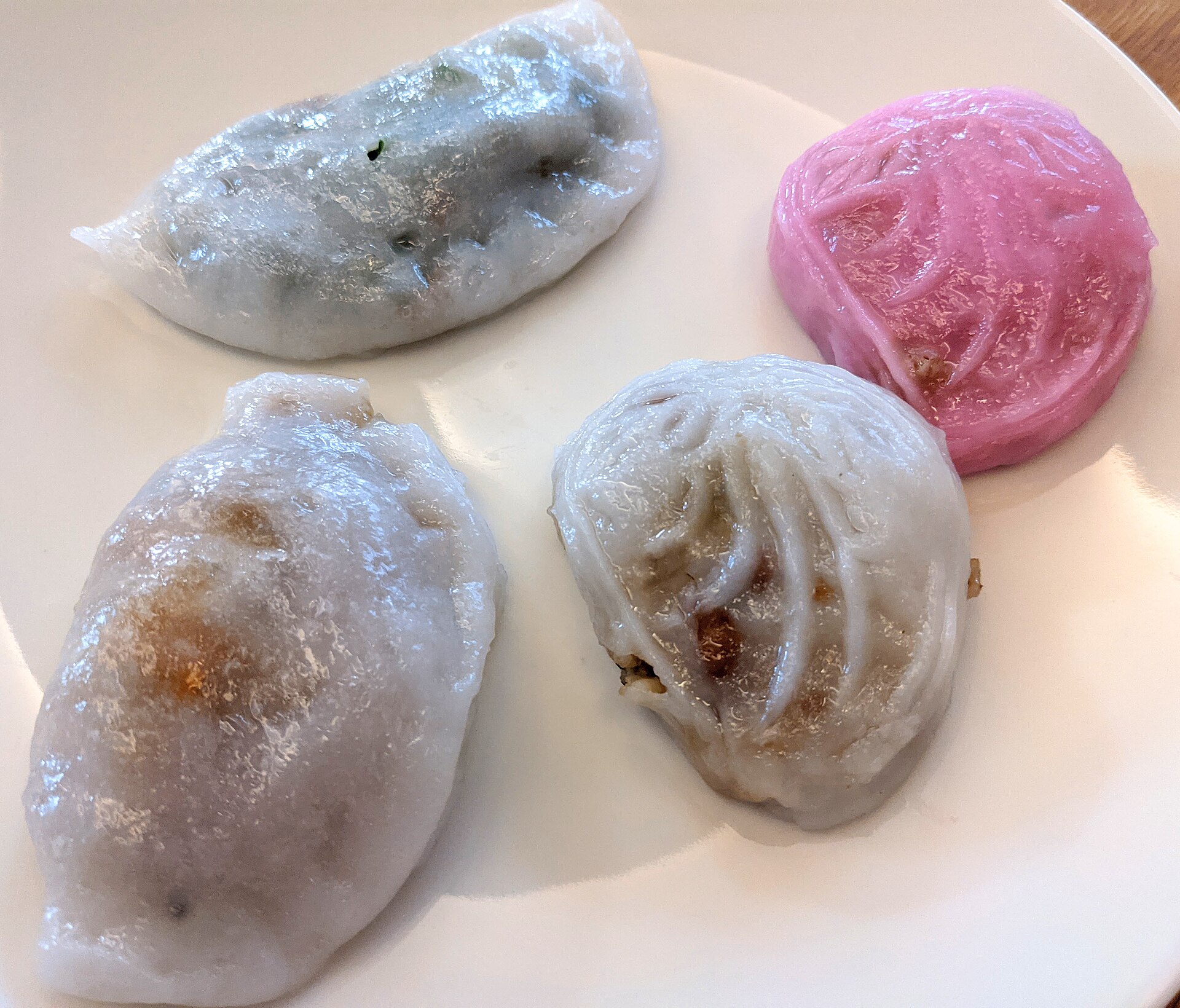
On a Teochew table, you can often tell the time of year by the kueh.
Kueh (粿) is the Teochew word for a whole family of cakes — most of them pressed from rice flour, some steamed, some pan-fried, sweet or savoury, plain or stuffed. They are humble food, made at home from cheap grain, and yet they sit at the very centre of Teochew ritual life. There is an old saying in Chaoshan:
时节做时粿 — sî-tsoih tsò sî-kueh. For each festival, you make that festival’s kueh.
To follow a year of Teochew kueh is to follow the calendar of prayers, harvests and ancestors that the food was made to honour.
The pink peach of celebration
The most recognisable of them all is âng tô kueh (红桃粿), the “red peach kueh” — a soft pink dumpling pressed into the shape of a peach, the Chinese emblem of long life. Lift the lid off a steamer and there they are: glossy, rosy, lined up like little cushions.
Inside the thin rice-flour skin is usually a savoury filling of glutinous rice fried with dried shrimp, mushroom, peanuts and shallots. The blush of the skin traditionally came from a little red colouring worked into the dough and kneaded until the tint ran even. The shape and the colour are not decoration — they are the message. Red is auspicious; the peach wishes longevity. That is why âng tô kueh appear at birthdays, at New Year, and above all on the altar, offered to the gods (拜老爷) and to the ancestors.
The peach pattern comes from a kueh mould (粿印), a block of carved wood — often passed down in a family — pressed into the dough to leave the peach ridges and sometimes the character 寿, longevity, in the centre. To own your grandmother’s kueh mould is to own a small, dense piece of inheritance.
A different kueh for every season
Where âng tô kueh is the everyday celebrant, other kueh belong to particular moments in the year:
- Chu kak kueh / 鼠曲粿 — its skin darkened to a deep, mossy green with Jersey cudweed, a wild herb gathered in early spring. It carries a faintly grassy fragrance and is tied to Qingming (清明), the tomb-sweeping festival, when families honour the dead.
- Puk zi kueh / 朴籽粿 — a pale-green steamed cake, lightly sweet and a little bitter, made from the leaves of the pak tree, also eaten around Qingming. Steamed in small cups, the tops split open like blooming flowers — a good split is said to be a good omen.
- Soon kueh / 笋粿 — a translucent, chewy dumpling plump with chopped bamboo shoot, jicama and dried shrimp, a savoury favourite year-round.
- Gu chai kueh / 韭菜粿 — the same idea filled with garlic chives, often pan-fried until the bottom crisps.
- Ti kueh / 甜粿 — the dense, sticky sweet cake of Lunar New Year, steamed for hours; sliced and fried in the days that follow until the edges caramelise.
Each one is a small seasonal clock. You do not eat chu kak kueh in midsummer; you do not skip the sweet ti kueh at New Year. The kueh tells you where you stand in the year.
Made by hand, made together
Kueh-making was — and in many homes still is — a communal act, usually led by the women of the family in the days before a festival. Rice is soaked and ground, dough is coloured and rested, fillings are fried, and then everyone presses, folds and pleats while the steamer fogs up the kitchen. Children are handed the easy jobs — oiling the moulds so the dough won’t stick, carrying finished trays to the steamer — and learn the shapes long before they learn the reasons behind them. The work is the point as much as the food: it gathers the household around a shared, repeated task, the way the festival is meant to gather the family.
Kueh in the diaspora
When the Teochew left Chaoshan, the kueh went too. In the hawker centres of Singapore and Malaysia, soon kueh, png kueh and ku chai kueh are everyday snacks, steamed fresh behind glass; in Thailand and beyond, Teochew families keep pressing âng tô kueh for the altar at New Year. The fillings drift a little with local taste, the spelling changes from town to town — and that is exactly as it should be. The kueh belongs to the whole Teochew world, not to any one corner of it.
So if a Teochew friend ever hands you a warm pink peach of a cake, take it. Somewhere behind it is a wooden mould, a festival, and a wish for a long life.