FeaturedCulture
The letter that crossed the sea
How Give Grandma a Love Letter turned qiaopi, Teochew memory and diaspora trust into a national conversation.
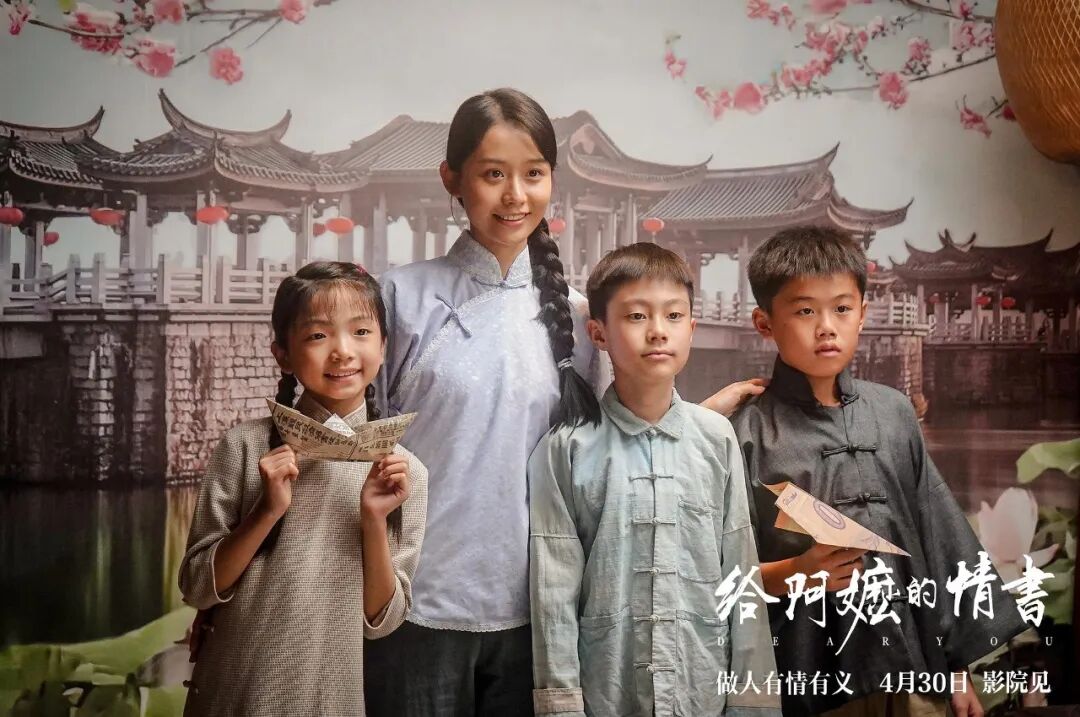
The surprise of Give Grandma a Love Letter is not that it made people cry. Chinese cinema has never lacked stories of separation, migration, parents left behind, or children trying to understand an older generation after the fact. The surprise is that this small, Teochew-language film found its audience through something almost unfashionable: a letter.
Not a confession shouted in close-up. Not a twist engineered for social media. A letter: folded, carried, delayed, reread, misunderstood, preserved. In the film, the letter is also a remittance, a lifeline and a moral promise. In Teochew and Minnan usage, these overseas Chinese letters with money enclosed or attached were known as qiaopi (侨批), also called yinxin (银信), literally silver letters. Between the nineteenth century and the late twentieth century, they connected migrant workers and merchants in Southeast Asia with families in Chaoshan, Fujian, Wuyi and other hometown regions across southern China.
That old paper infrastructure is the emotional engine of the film. According to a CCTV article reposted by Sina, the story begins with a special family letter that sends a younger descendant to Thailand in search of a grandfather who has been missing for decades. Along the way, the film returns to an earlier generation: men who went “down to the Southern Ocean,” women who held households together, children who grew up with fathers present mostly through paper, money and the recurring phrase that all was well.
A qiaopi was never only a letter. It was proof that someone across the water was still trying to remain family.
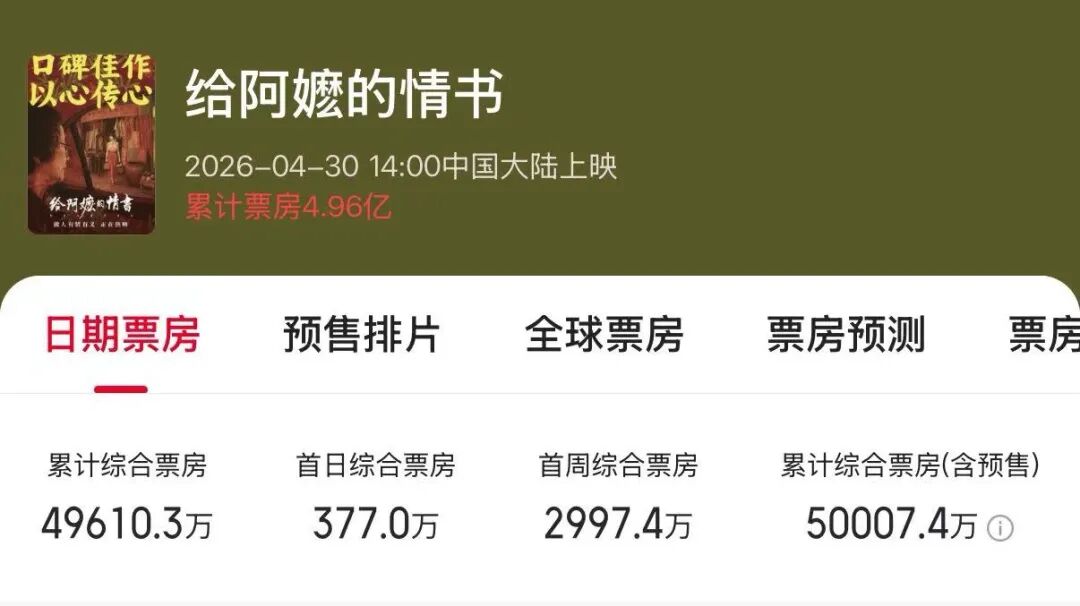
By 17 May 2026, the film had reportedly crossed 500 million yuan in box office including presales, with two consecutive days above 100 million yuan in daily takings. What had begun as a regional, dialect-forward work became one of the season’s most discussed cultural objects. The usual surprise was repeated in article after article: no obvious blockbuster machinery, no dependence on celebrity spectacle, no strong visual-effects hook. Instead, it moved through word of mouth, through audiences telling other audiences that the film had left something quietly lodged in them.
Part of that force comes from the film’s restraint. A People’s Daily client article reposted by Sina reads the film through its balance between lightness and weight. Its plot turns on large facts: migration, death, poverty, years of deception, a woman sustaining two families across the sea. But its emotional language remains domestic. Food, quilts, winter-solstice rice balls, school fees, a bicycle remembered and finally sent: these are the objects through which love becomes visible.
That is also how many actual qiaopi worked. They were rarely grand literary statements. They were instructions, reassurances, apologies, accounts of money sent and money received. A husband in Siam might report that he was safe and enclose funds. A wife in Chaoshan might reply with news of crops, children, illness, ceremonies, theft, hunger, school, weather. The language could be plain to the point of severity. But the plainness was the point. In societies where open emotional display was often constrained, care traveled under the cover of practical matters.
A CCTV collection of letters from the film shows how much feeling is hidden inside ordinary speech. The recurring wish is not ecstasy but peace: eat well, stay warm, do not worry, keep the children in school, stay safe. It is a language of love that refuses to call attention to itself. In that refusal, it becomes almost unbearable.
The deeper turn in Give Grandma a Love Letter is that some of the letters are not what they first seem. The figure of Zheng Musheng leaves for Thailand and sends money home through qiaopi. After his death, Xie Nanzhi continues writing in his name to Ye Shurou, sustaining a fragile fiction that is also an act of care. What might have been treated as melodrama becomes, in the accounts around the film, a story of two women bound by grief, responsibility and a long apprenticeship in motherhood. One woman keeps another alive by giving her hope; over time, the exchange itself becomes real enough to shape both lives.
That is why the film’s tenderness has a harder edge than nostalgia. It is not simply saying that the past was purer, or that people once loved better. It is asking what forms of obligation become possible when a community treats trust as a shared inheritance. A TechFlow essay republished by Huxiu makes this point through financial history. Qiaopi, it argues, was not only a sentimental archive. It was also a private, cross-border remittance network that operated for more than a century through water-carriers, letter shops, couriers, kinship, hometown ties and reputation.
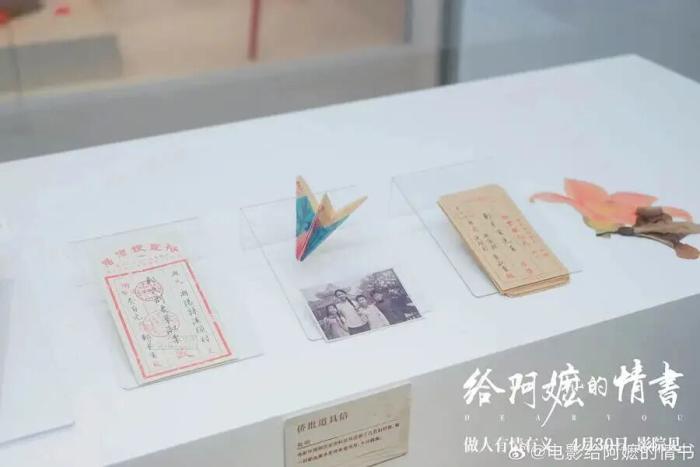
Before modern bank rails reached migrant families, before electronic transfers, before SWIFT became the invisible skeleton of global finance, qiaopi moved money through a dense human system. A worker in Thailand, Singapore, Malaya, Vietnam or elsewhere in Southeast Asia could hand wages and a letter to a trusted intermediary. The message and funds would pass through networks of piju (批局), couriers and local deliverers, eventually arriving at a village household. The return receipt, the reply letter and the social memory of whether someone had kept faith completed the transaction.
TechFlow’s language is deliberately contemporary, comparing qiaopi to decentralized settlement, netting and trust networks. Some of those analogies are rhetorical, and they should be handled carefully. But the underlying point is valuable: qiaopi was not quaint. It was infrastructure built out of social credibility. Its power came from the fact that default was not merely a legal failure; it was a moral and communal collapse. In small places connected by surname, dialect, temple, market and migration route, reputation had weight.
This is where the film becomes larger than film. Chinanews, reposting an article from the WeChat account “小圆规,” placed qiaopi inside a broader reflection on overseas Chinese history and contemporary suspicion toward Chinese diaspora communities. The article notes that qiaopi recorded not only remittances but also schooling, food, sickness, work, parental duty and the building of lives in host societies. It argues that these papers show overseas Chinese as workers, family members, bridge-builders and participants in local economies, not as the flattened figures that appear in hostile political narratives.
That argument matters, though it also deserves nuance. The Teochew diaspora was never one thing. Migrants were laborers, traders, shopkeepers, religious donors, political actors, restaurant families, factory owners, farmers, writers and children who grew up between languages. Some assimilated quickly; some held tight to hometown associations; many did both in different ways. Thailand, Cambodia, Vietnam, Singapore, Malaysia, France, the Americas, Hong Kong and the Chaoshan homeland each produced different versions of being gaginan (胶己人), “our own people.” No single film can contain them all.
But a film can reopen a door.
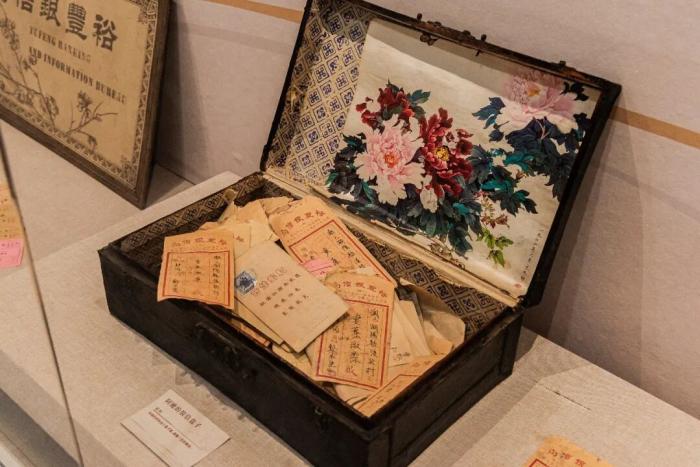
Give Grandma a Love Letter seems to have done that by returning to the smallest unit of diaspora history: not the nation, not the clan hall, not the heroic pioneer, but the family message. The qiaopi is intimate enough to hold a mother’s worry and formal enough to become an archival document. It carries money but also carries grammar, food memory, names, kinship hierarchy, seasonal ritual and the ache of distance. It is proof that migration was not only departure. It was also maintenance.
Perhaps that is why the film’s popularity feels culturally significant. It tells contemporary audiences, many of whom live in a world of instant messages and disappearing images, that slowness once had its own moral drama. To wait for a letter was to live inside uncertainty. To write one was to choose what pain to reveal and what pain to hide. To send money home was not only economic support; it was a way of remaining a husband, daughter, son, father or mother across water.
There is a scene implied by all these articles even if one has not yet seen the film: someone opens a letter and reads not only the words, but the life that made the words necessary. That may be the secret of the film’s reach. It takes an old Teochew and overseas Chinese practice and makes it legible as a modern feeling. It reminds viewers that love is not always a declaration. Sometimes it is a remittance wrapped in paper. Sometimes it is a lie told to keep another person standing. Sometimes it is a winter-solstice rice ball saved for someone who may never come home.
And sometimes, decades later, it becomes a movie that sends a whole country back to its drawers, trunks, albums and unfinished family questions.