Grand spectacle, empty seats: the two faces of Teochew opera in Bangkok
A community troupe playing to half-empty houses. A corporate extravaganza at a luxury mall. Both call themselves preservation. Only one clearly reaches the people keeping the art alive.
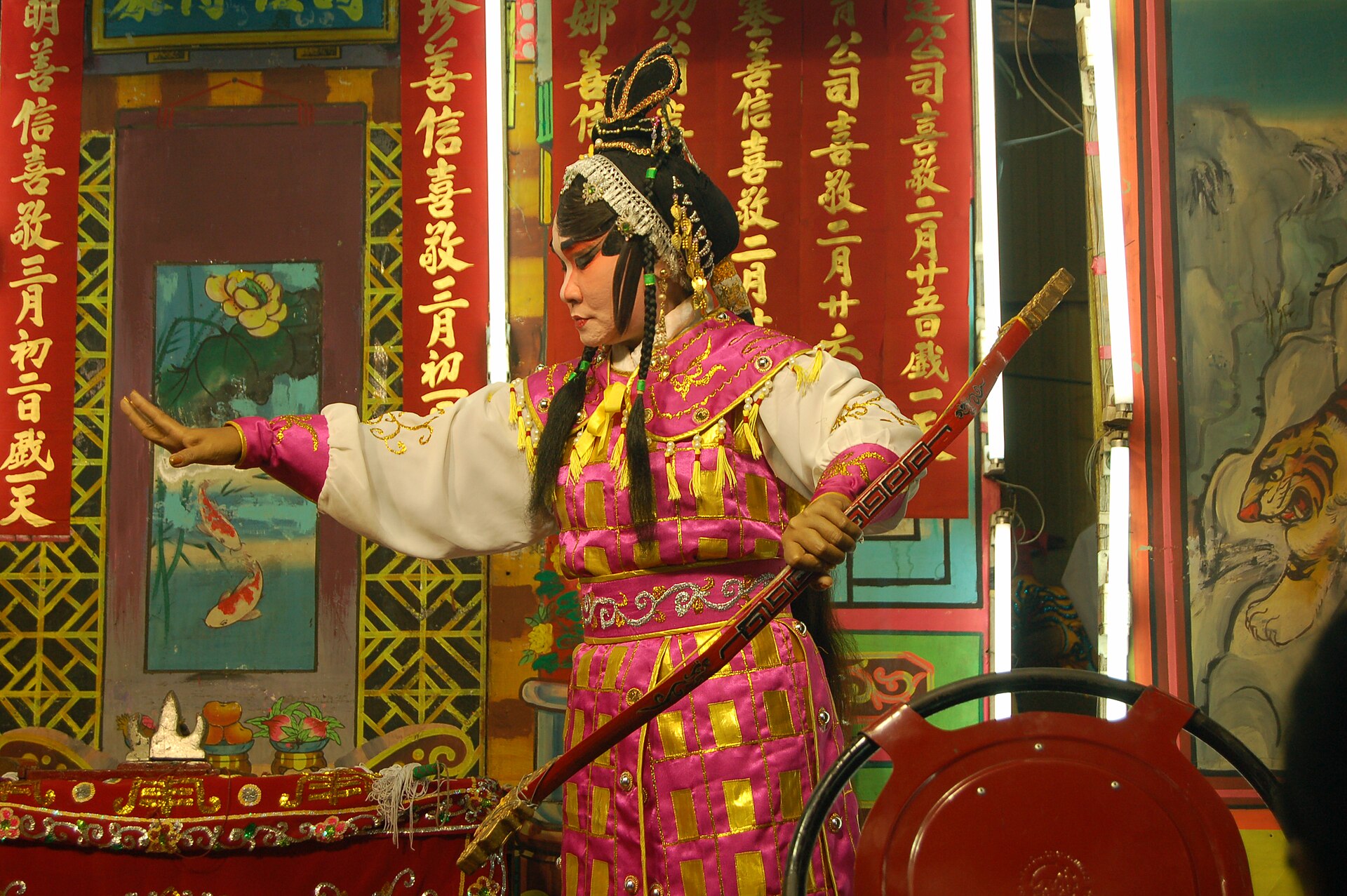
There is a scene buried in a 2022 Xinhua report that has stayed with me. A professional Teochew opera troupe in Bangkok. Qing Nang Yu Lou Chun, over 80 years old, sometimes performs before an audience smaller than the cast itself. Thirty actors on stage. Twenty people in the seats. The lights go up anyway. The drums strike. The painted faces hold their expression.
That image is the real story of Teochew opera in Thailand. And it is the story that got almost completely drowned out three years later when, in July 2025, CP Group brought the Guangdong Teochew Theatre’s Number One Troupe to ICONSIAM’s True Icon Hall for a week of performances that read, in every press release, like a cultural triumph. According to The Nation Thailand, sixteen unique shows, seats priced up to 2,500 baht, with CP Group and major Thai-Chinese business institutions prominently attached. A spectacular, by any measure.
Both events are described, in the coverage that surrounds them, as preservation. I am not sure both deserve the word.
The inconvenient baseline
To understand what CP Group did at ICONSIAM, you first have to sit with what Xinhua documented in 2022, later republished by China Daily and widely read across the Thai-Chinese community. The picture is not complicated, but it is uncomfortable.
Qing Nang Yu Lou Chun was once a full troupe. In the 1990s, veteran performer Xu Qing’an recalls, they had over a hundred actors and thousands of visitors every show. By 2022, thirty actors remained. Annual performances had fallen from 300 to under 100. That was already a pandemic-accelerated decline of something that had been shrinking before COVID arrived. The audiences who still came were overwhelmingly elderly Thai-Chinese immigrants. Younger Thai-Chinese, third and fourth generation, Thai-educated and Thai-speaking, watched the costumes with appreciation and understood nothing the characters were saying.
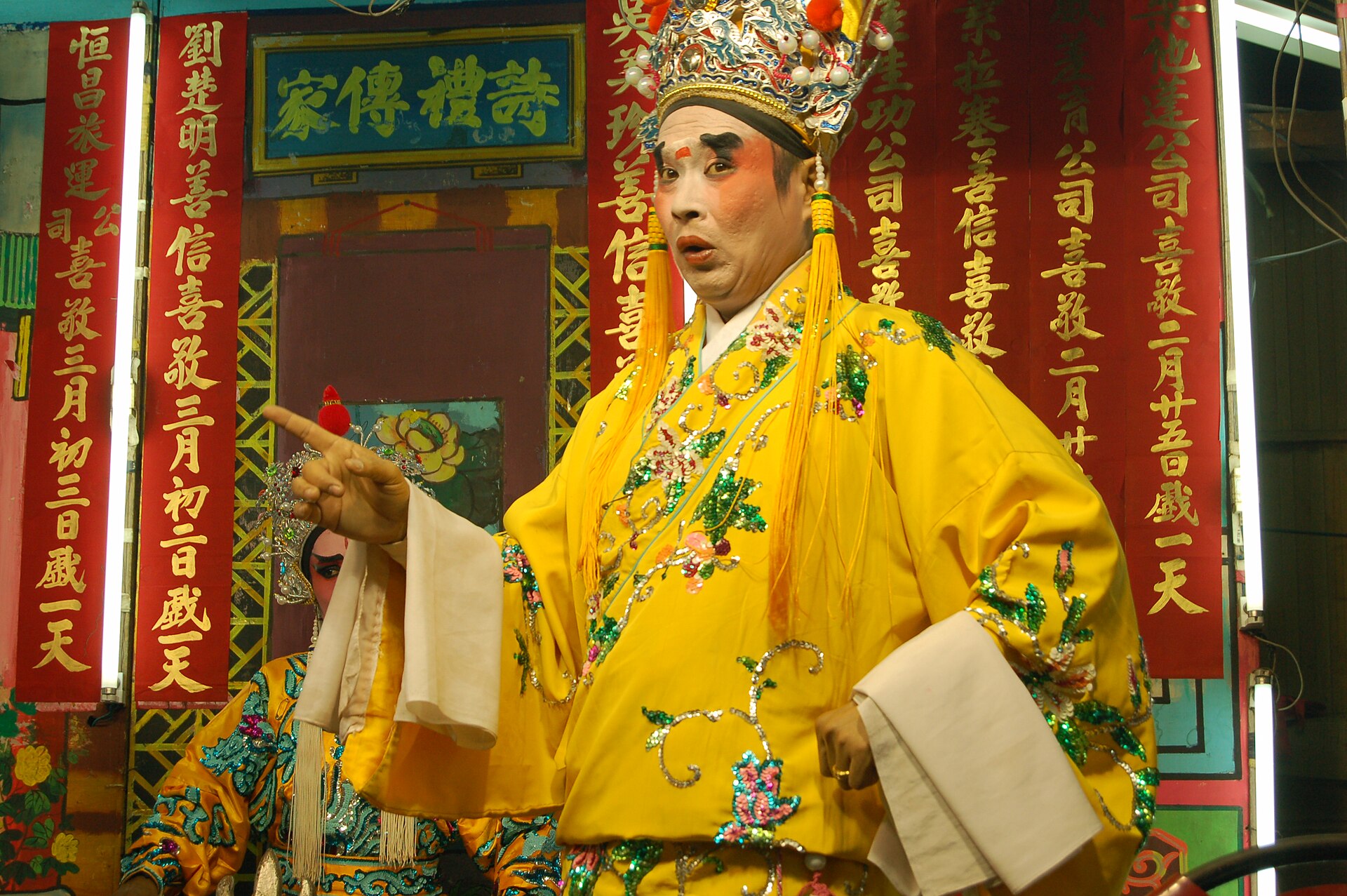
This is the language problem, and it is structural. The dialect that Teochew opera is sung in is not Mandarin, not Thai, not even standard Cantonese. It is Teochew, an eight-tone Southern Min variety that most young people in the Bangkok Chinese community no longer speak. You can add subtitles, as the 2025 ICONSIAM performances did for both Thai and Chinese. But subtitles are a concession to distance, not a cure for it. You are already watching something that was never meant to be read.
Zhuang Meilong, the 81-year-old founder of the Thai-Chinese Dramatic Arts Institute, told the Xinhua reporter she was working on translations into Thai and planning to open an opera school in Bangkok. Both plans sound sensible. The available reports do not show whether either has materialised at scale.
The community tier: a quieter effort
A year before the ICONSIAM extravaganza, something smaller and, I think, more instructive happened. In June 2024, Thailand’s Ministry of Culture, the Teochew Association of Thailand, the Thai-Chinese Chamber of Commerce, and the Teng Hai Association co-presented a free five-day Teochew opera festival at the Teochew Association’s own hall in Bang Rak, Bangkok. The troupe came from Chenghai in Guangdong Province, a more community-scale counterpart to the later Guangdong Teochew Theatre production. No Huawei sponsorship. No 2,500-baht tickets. Admission free, every night for five days.
Dr. Sangchai Sothivorakul, President of the Chinese Opera Association, described it as “dazzling” and spoke about broadening the repertoire beyond war epics toward themes of gratitude, education, and cultural heritage. There is something quietly important in that reframing. It is an acknowledgement, even if indirect, that the form needs to speak to people who are not already converts. That the goal is not to preserve an object in glass but to keep it breathing.
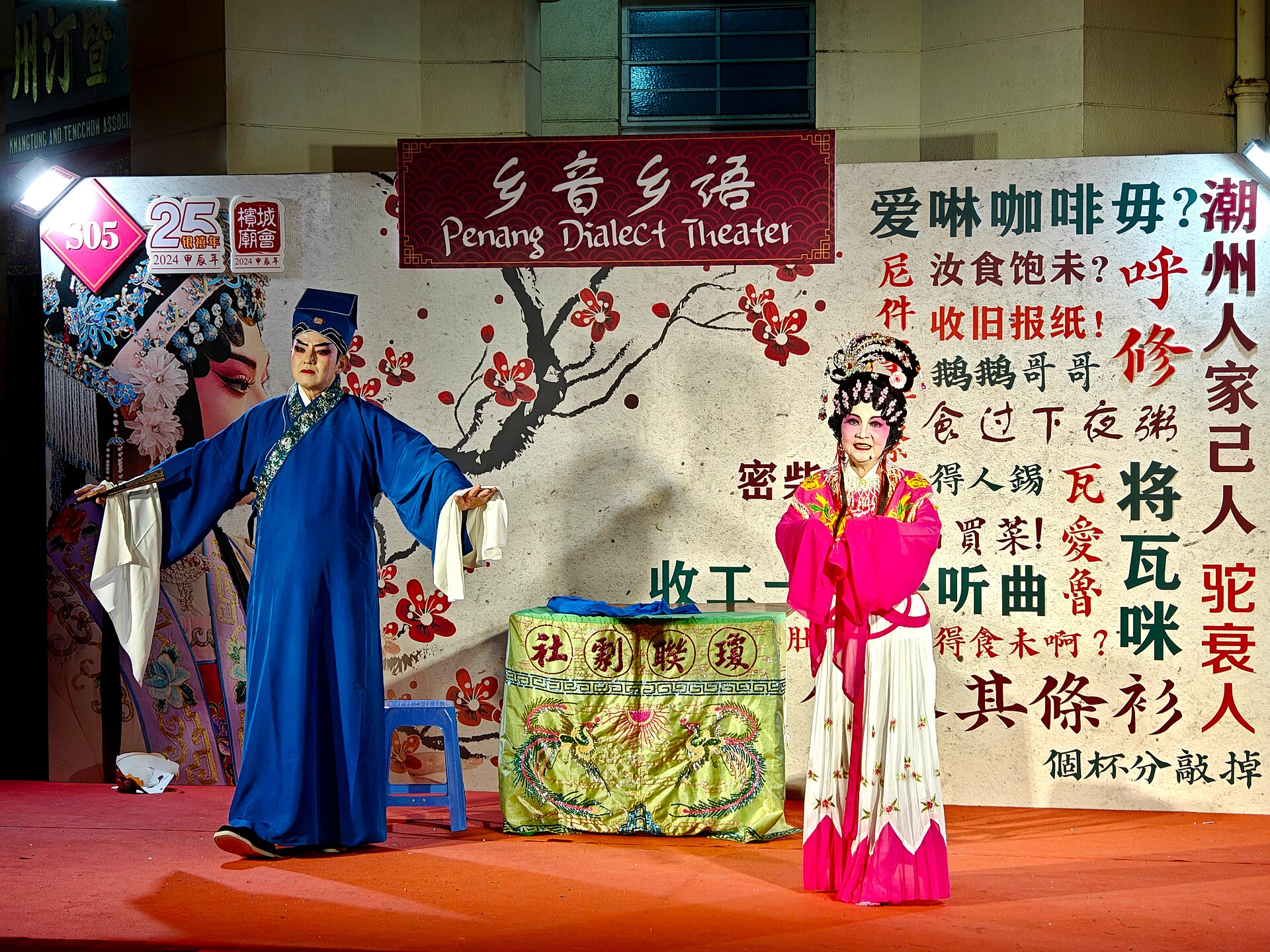
The venue matters too. The Teochew Association of Thailand’s hall in Bang Rak is not a luxury shopping centre. It is a community institution. The kind of building that has hosted clan meetings, fundraisers for flooded villages back in Chaoshan, the funerals of old men who arrived in Bangkok with nothing. Putting a free opera there is different in kind from putting a ticketed one at ICONSIAM, even if the art form on stage is the same.
I am not dismissing the ICONSIAM production. I am saying the two events are doing different things, and we should not use the same word for both.
The spectacular, and what it is actually for
Let us be honest about the CP Group festival. The Nation Thailand’s announcement and their accompanying video report describe it in the language of cultural diplomacy: the 50th anniversary of Thailand-China bilateral relations, “a cultural bridging spectacular,” love, loyalty, sacrifice, virtue. These are not wrong descriptions. Teochew opera has been a cultural bridge since the first immigrants arrived at the mouth of the Chao Phraya carrying it in their memory.
But the sixteen organisations listed as co-presenters are not cultural charities. CP Group, Thai Beverage, the Federation of Thai Industries, Bangkok Bank, Huawei, ZTE, Midea, Tencent. They are commercial entities with substantial interests in the health of the Thailand-China relationship. When Suphachai Chearavanont, whose family are themselves of Teochew descent, brings the Number One Troupe to the most visible venue in Bangkok, that is a statement about business relationships, diplomatic alignment, and the projection of a particular identity, as much as it is about art. None of which, I want to be clear, is a reason to dismiss it. Patronage has always been entangled with power. The operas being performed, with their themes of loyalty and moral rectitude, were themselves designed, in part, as instruments of social cohesion.
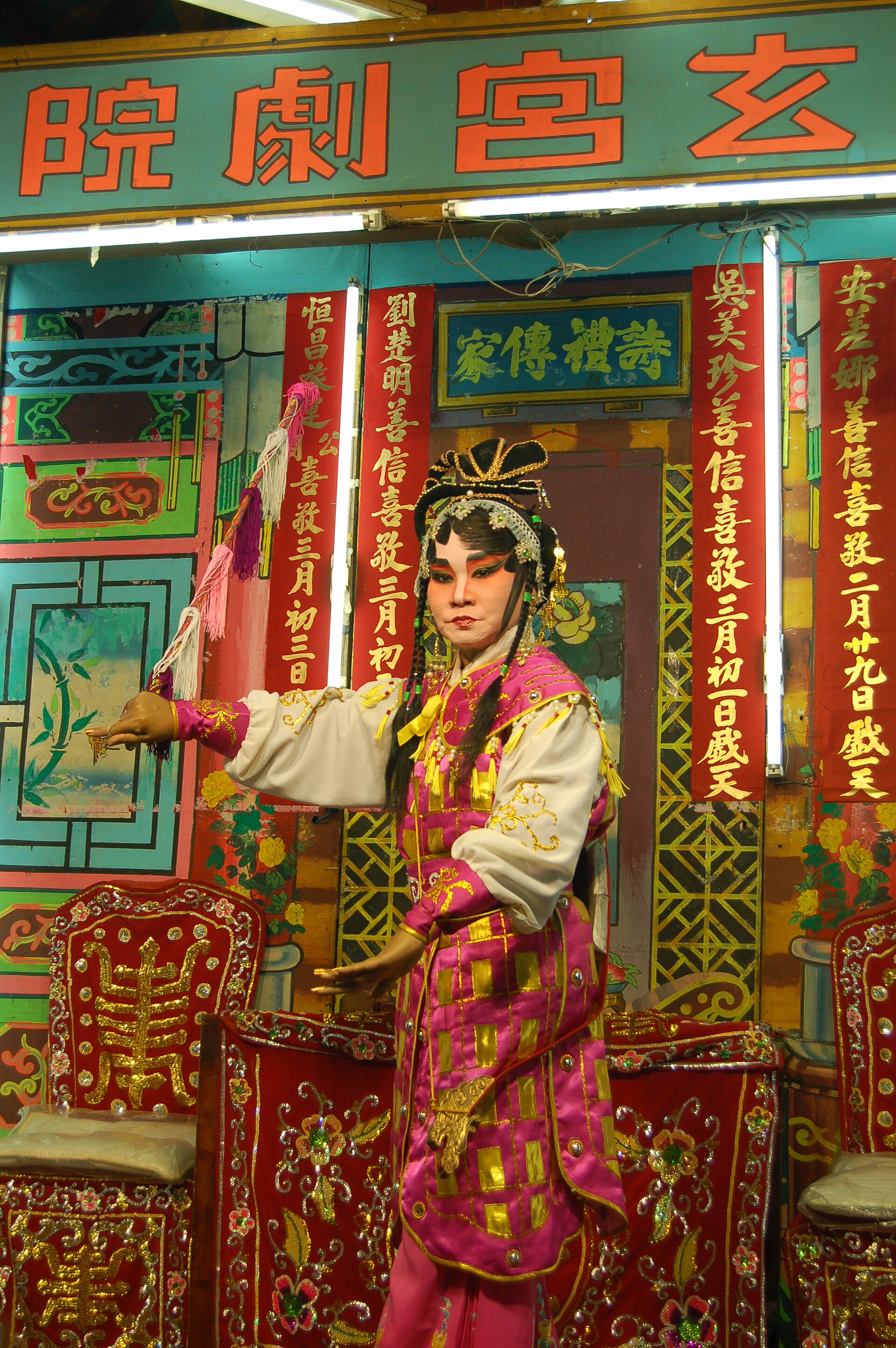
What concerns me is narrower. The ICONSIAM production brings the finest available troupe from mainland China and presents a glossy version of Teochew opera to an audience who paid up to 2,500 baht for the privilege. That is wonderful, as a one-week event. But the troupe flies home. The community troupes in Bangkok are still there on July 17th. The ones with thirty actors, the ones that sometimes play to emptier seats than they have performers, still struggling for audiences and funding and young recruits.
Does one feed the other? I genuinely do not know. There is an argument that a high-profile production raises the prestige of the form and draws curious newcomers who then find their way to community performances. I hope that is true. But there is also an argument that it creates a parallel track. A flashy import that fulfills everyone’s cultural obligation for the year and lets the actual local ecosystem continue to decay unnoticed.
What Suluan Chen knows
The human detail I keep returning to is a woman named Suluan Chen, sixty-six years old, mentioned briefly in the Xinhua piece. She began performing at eight. Not because she chose it. Her parents, unable to afford her schooling, placed her with a troupe through an indenture arrangement. She has been performing ever since, across the full arc of what Teochew opera has been in Thailand: the golden years, the slow audience attrition, the pandemic, the current precarity.
She is not quoted saying whether the ICONSIAM festival will save anything. She is just there, still performing, in her sixties, for audiences that are sometimes very small.
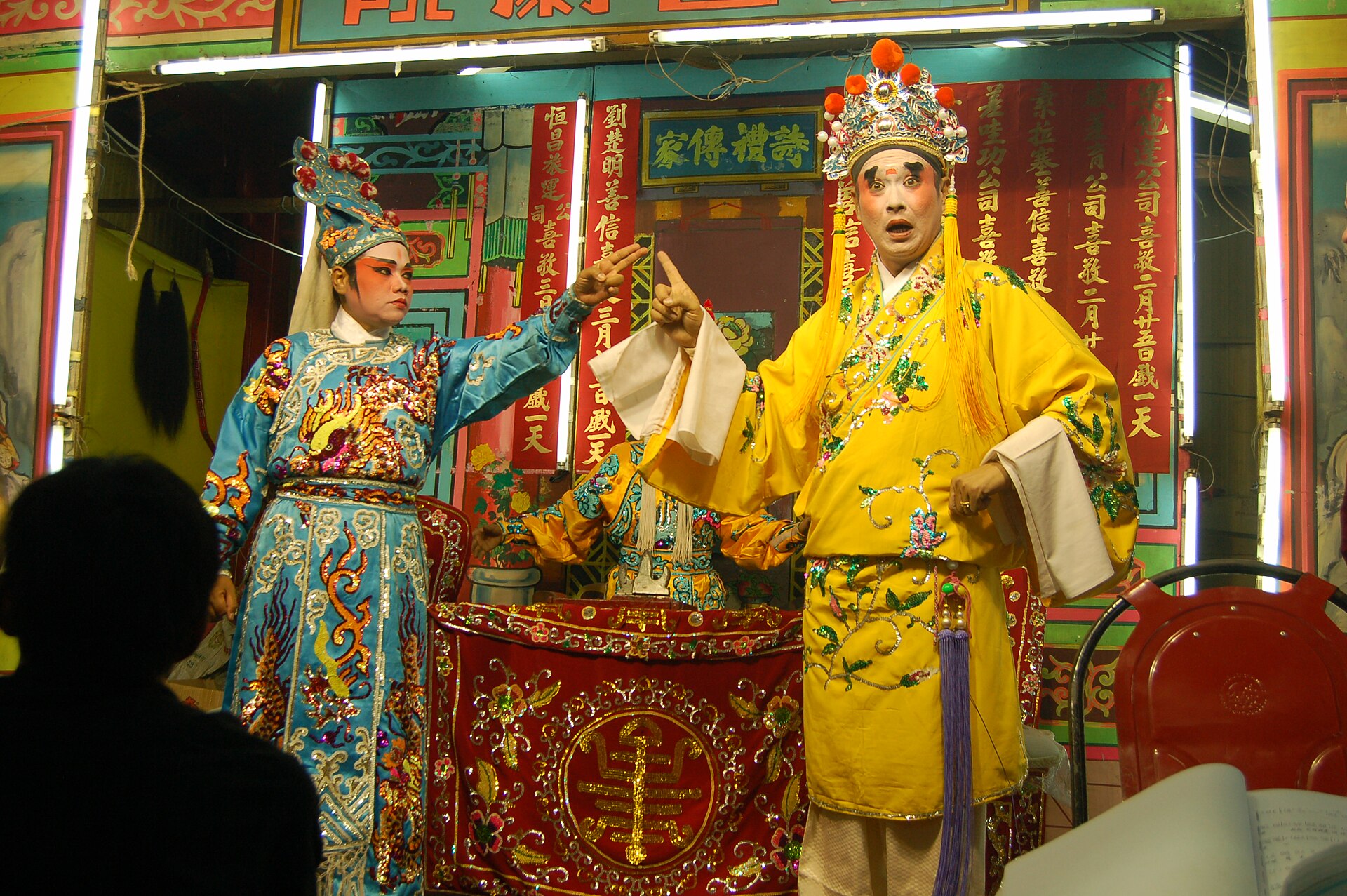
That is what preservation looks like at ground level. Not sixteen shows with state-of-the-art lighting and corporate sponsors. One woman, a troupe of thirty, a stage, and the discipline to go on anyway. The grand spectacle can share the name “Teochew opera” with what Suluan Chen does, but they are not the same endeavour, and they do not face the same risks.
What would actually help
I am not a pessimist about any of this. Three separate Teochew opera events were covered in English-language media between 2022 and 2025: the Xinhua survival report, the 2024 Bang Rak free festival, the 2025 ICONSIAM spectacle. That tells me the conversation is live, the institutions are still standing, and people still care. That is not nothing.
But if the goal is genuinely to keep Teochew opera alive in Thailand rather than to keep it available as an occasional luxury experience or a diplomatic prop, then the work is specific. Zhuang Meilong named it in 2022: translation into Thai and a school. Young performers trained locally, performing stories that a Thai-speaking audience can follow without reading a subtitle strip. That is unglamorous work. It will not produce a press release listing fourteen co-sponsors. But it is what the form actually needs.
The Chearavanont family’s Teochew roots are not irrelevant here. If CP Group’s patronage flowed not only toward a week at ICONSIAM but toward the institutional structures that Zhuang Meilong described, sustained funding for community troupes, a real school, a translation programme, that would be a legacy. A week of performances, however magnificent, is a memory.
Teochew opera has been sung in Bangkok for over eighty years. It has survived poverty, war, assimilation, a pandemic, and the inexorable drift of generations away from a dialect their grandparents brought across the sea. It deserves more than being saved twice a year for different audiences. It deserves the boring, structural, unglamorous work that actually keeps things alive.
Suluan Chen knew that at eight years old, even if she had no choice in the matter.